
Cart
0
Introduction
Night vision devices are precision optical systems. Whether you use a PVS-14 monocular, PVS-31 binocular night vision device, BNVD system, or another helmet-mounted NVG platform, your lenses are among the most exposed and vulnerable parts of the setup.
Dust, sand, fingerprints, moisture, branches, impact, storage pressure, and training environments can all damage or degrade your optics over time.
That is why lens protection is not optional.
For many users, the question is not whether they should protect their NVG lenses, but which protection method they should choose.
Two of the most common options are:
-
Sacrificial lenses
-
Universal lens protection covers
Both can help protect your night vision device, but they serve different purposes.
In this guide, the team at ARGUS Night Vision explains the difference between sacrificial lenses and universal protection covers, when to use each one, and how to build a smarter lens protection setup for your NVGs.
Why NVG Lens Protection Matters
The lenses on a night vision device are not simple pieces of glass.
They are part of a precision optical system that directly affects image clarity, focus, light transmission, and overall usability.
A scratched or damaged lens can cause:
-
Reduced image sharpness
-
Glare or light scatter
-
Lower contrast
-
Blurred edges
-
More difficult focusing
-
Expensive repair or replacement
-
Reduced resale value
For professional users, damaged optics can also reduce reliability in the field.
This is especially important for users who operate in:
-
Tactical training environments
-
Search and rescue missions
-
Hunting and outdoor activities
-
Vehicle operations
-
Woodland or desert terrain
-
Rain, fog, dust, or sand
-
Long-term helmet-mounted use
A simple protection accessory can help prevent avoidable damage and extend the life of your night vision system.
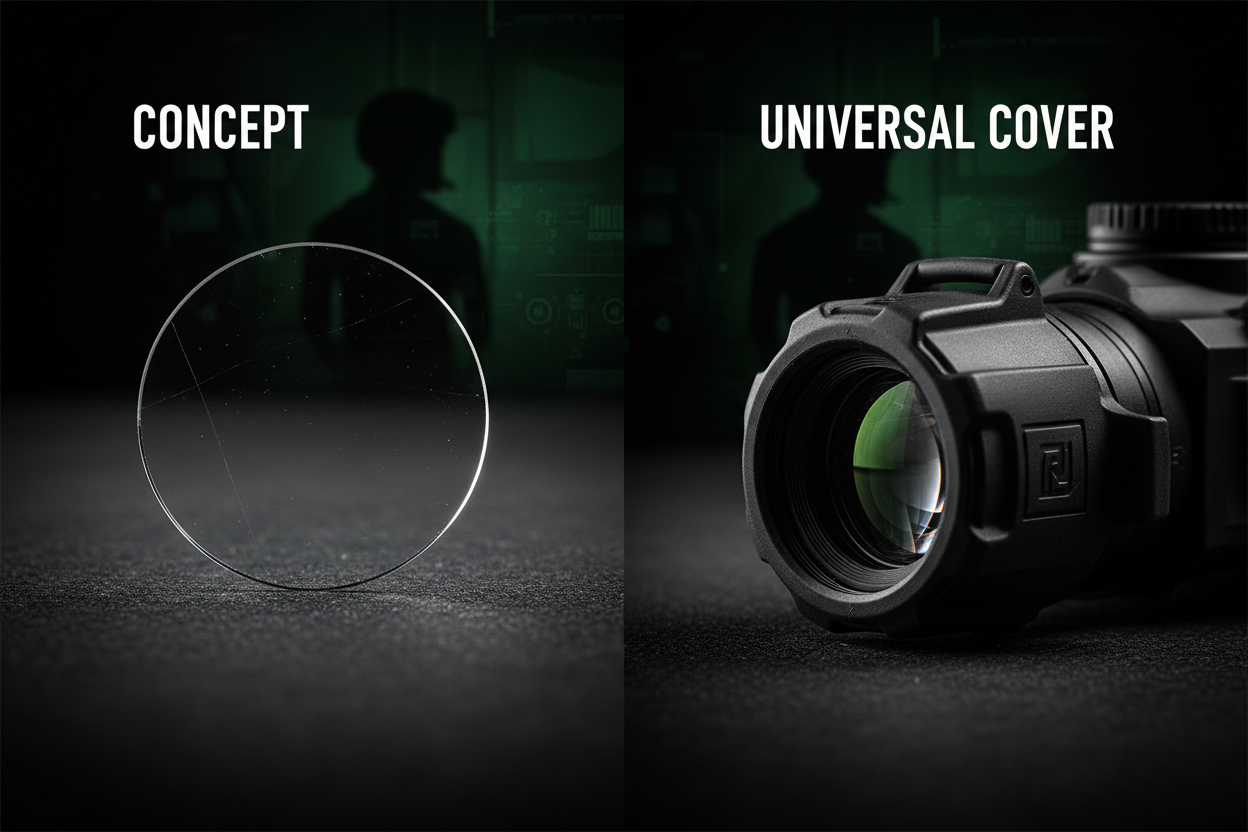
What Is a Sacrificial Lens?
A sacrificial lens is a transparent protective lens installed in front of the main objective lens.
Its purpose is simple:
It takes the damage so your main optic does not have to.
The word “sacrificial” means the protective lens is designed to be replaced if it gets scratched, cracked, or damaged.
Instead of damaging the expensive objective lens, the user replaces the lower-cost sacrificial lens.
Sacrificial lenses are commonly used to protect against:
-
Sand
-
Dust
-
Scratches
-
Light debris
-
Brush contact
-
Training damage
-
Environmental exposure
They are especially popular among users who actively wear NVGs in rough environments.
Advantages of Sacrificial Lenses
1. Active Lens Protection
Sacrificial lenses protect the objective lens while the device is in use.
This makes them valuable during movement, training, or field operations.
If you are walking through brush, working around dust, or training in harsh conditions, a sacrificial lens can help protect the optical surface from direct contact.
2. Replaceable Protection Layer
The biggest benefit of a sacrificial lens is replaceability.
If the sacrificial lens becomes scratched, you replace that lens instead of repairing the main NVG optic.
This can reduce long-term maintenance cost and protect the value of the device.
3. Better for Harsh Environments
Sacrificial lenses are useful when the device is exposed during active use.
They are especially helpful in:
-
Sandy environments
-
Windy outdoor conditions
-
Tactical training
-
Woodland movement
-
Dusty roads
-
Range use
-
Search operations
For users who regularly operate outside, sacrificial lenses are a smart first layer of protection.
Limitations of Sacrificial Lenses
Sacrificial lenses are useful, but they are not perfect.
1. Possible Image Quality Impact
Any extra optical layer can potentially affect image quality.
A low-quality sacrificial lens may introduce:
-
Glare
-
Reflection
-
Distortion
-
Reduced light transmission
-
Lower contrast
This is why quality matters.
For night vision, every bit of light transmission is important.
2. They Do Not Fully Protect the Lens During Storage
Sacrificial lenses protect the optical surface during active use, but they do not fully cover the entire lens area like a cap.
During storage or transport, a lens cover is usually still recommended.
3. They Can Get Dirty Quickly
Because sacrificial lenses are exposed, they can collect:
-
Dust
-
Mud
-
Water spots
-
Fingerprints
-
Oil
-
Debris
They need to be cleaned properly or replaced when damaged.
What Is a Universal Lens Protection Cover?
A universal lens protection cover is a cap-style protective accessory designed to cover the lens area when the device is not actively being used.
Instead of acting as a transparent optical layer during use, it protects the lens during:
-
Storage
-
Transport
-
Helmet setup
-
Gear bag movement
-
Equipment staging
-
Long-term protection
-
Outdoor downtime
The ARGUS Universal Lens Protection Cover for PVS31 and PVS14 Optics is designed for broad compatibility and practical field use.
It uses soft rubber material for flexibility and compatibility, with a two-point attachment design to help reduce loosening during use.
Advantages of Universal Protection Covers
1. Excellent Storage and Transport Protection
Many NVG lenses are damaged when the device is not being used.
This often happens during:
-
Packing
-
Unpacking
-
Helmet transport
-
Gear storage
-
Vehicle movement
-
Contact with other equipment
A universal protection cover helps shield the lens from accidental contact when the device is stored or carried.
2. Easy to Use
A good protection cover should be simple.
Users should be able to install or remove it quickly without complicated tools.
This makes lens protection more likely to become a daily habit.
The ARGUS Universal Lens Protection Cover is designed for practical use with PVS31 and PVS14 optics, making it a simple upgrade for many common NVG setups.
3. Flexible Compatibility
Universal covers are useful because they can often work across multiple night vision platforms.
This is helpful for users who own more than one device or use different configurations.
For example, users may run:
-
PVS-14
-
PVS-31
-
BNVD-style systems
-
Training setups
-
Backup devices
A universal-style cover can simplify gear management.
4. Prevents Everyday Wear
Not all lens damage comes from extreme environments.
Small daily damage can happen from:
-
Dust in a gear bag
-
Accidental bumps
-
Finger contact
-
Helmet placement
-
Storage pressure
-
Repeated handling
A universal protection cover helps reduce this kind of wear.
Limitations of Universal Protection Covers
Universal protection covers are highly practical, but they are not the same as sacrificial lenses.
1. Usually Not Used While Viewing
Most protection covers must be removed before actively using the night vision device.
That means they protect the lens during storage and transport, but not while looking through the optic.
2. They Do Not Replace Active Optical Protection
If you are moving through sand, brush, rain, or rough training environments, a transparent sacrificial lens may still provide better active-use protection.
3. Fit Should Be Checked
Universal designs are flexible, but users should still confirm fit with their specific device and lens setup.
This is especially important if the device has aftermarket optics, adapters, filters, or other accessories installed.
Sacrificial Lens vs. Universal Protection Cover: Quick Comparison
| Feature | Sacrificial Lens | Universal Protection Cover |
|---|---|---|
| Main purpose | Protects lens during active use | Protects lens during storage/transport |
| Transparency | Yes | Usually no |
| Used while viewing | Yes | Usually removed before use |
| Best for | Dust, sand, brush, field use | Gear bags, storage, helmet transport |
| Replacement role | Replaceable optical protection layer | Reusable cap-style protection |
| Image impact | Possible if low quality | No viewing impact when removed |
| Ideal user | Active field users | Almost every NVG user |
Which One Should You Choose?
The best choice depends on how you use your NVGs.
Choose Sacrificial Lenses If:
You should consider sacrificial lenses if you:
-
Use NVGs during active movement
-
Train outdoors
-
Operate in dusty or sandy environments
-
Move through brush or vegetation
-
Want protection while viewing
-
Need a replaceable optical protection layer
Sacrificial lenses are best for active use.
Choose Universal Protection Covers If:
You should choose universal protection covers if you:
-
Want simple daily lens protection
-
Store NVGs in a case or gear bag
-
Transport helmet-mounted night vision
-
Want to reduce accidental scratches
-
Use PVS-14 or PVS-31 optics
-
Need an affordable and practical protection accessory
For most users, a protection cover is one of the easiest upgrades to justify.
For everyday storage and transport, the ARGUS Universal Lens Protection Cover for PVS31 and PVS14 Optics is a practical option for protecting exposed NVG lenses.
The Best Solution: Use Both
For serious users, the best answer is not sacrificial lens or protection cover.
It is both.
A strong lens protection setup may look like this:
-
Sacrificial lens during active use
-
Universal protection cover during storage and transport
-
Proper cleaning tools
-
Protective case
-
Regular lens inspection
This gives your NVG lenses protection in more situations.
The sacrificial lens protects during operation.
The universal cover protects when the device is not being used.
Together, they help reduce the risk of lens damage and extend the life of your night vision system.
Lens Protection for PVS-14 Users
The PVS-14 remains one of the most popular night vision monocular platforms.
Because it is often used handheld, helmet-mounted, or adapted into different setups, the lenses are frequently exposed.
PVS-14 users should consider:
-
Objective lens protection
-
Eyepiece protection
-
Storage caps
-
Universal lens covers
-
Proper cleaning accessories
If you use a PVS-14-style system, you can browse compatible protection and replacement parts through the ARGUS Accessories Collection and the ARGUS Spare Parts Collection.
Lens Protection for PVS-31 Users
PVS-31-style binocular night vision devices have two objective lenses and two eyepieces.
That means there are more optical surfaces to protect.
A binocular system may also be more likely to stay helmet-mounted during transport, which increases the chance of accidental contact.
PVS-31 users should consider:
-
Dual objective lens protection
-
Eyepiece covers
-
Transport case
-
Helmet retention
-
Mount stability
-
Rear battery pack or counterweight
The ARGUS Universal Lens Protection Cover is designed for PVS31 and PVS14 optics, making it a useful option for common professional setups.
Lens Protection for BNVD Users
BNVD systems are often used by more advanced night vision users.
They are commonly helmet-mounted and paired with accessories such as:
-
Dovetail mounts
-
Battery packs
-
Counterweights
-
Thermal fusion devices
-
Protective caps
-
Spare parts
Because BNVD setups are more modular, users should think about lens protection as part of the complete system.
For BNVD maintenance and support parts, visit the ARGUS Spare Parts Collection.
Cleaning Your NVG Lenses Safely
Lens protection also depends on proper cleaning.
Even with covers and sacrificial lenses, optics can collect dust and debris.
Follow these basic practices:
1. Remove Loose Dust First
Use an air blower or lens-safe brush before wiping.
Wiping dust directly across the lens can create scratches.
2. Use Lens-Safe Materials
Use microfiber cloths or approved optical cleaning materials.
Avoid paper towels, clothing, dirty cloth, or harsh chemicals.
3. Do Not Over-Clean
Cleaning too often or too aggressively can wear coatings.
Clean only when needed.
4. Inspect Protection Accessories
If a sacrificial lens or protection cover becomes damaged, replace it.
A damaged protective part can stop doing its job properly.
Common Mistakes That Damage NVG Lenses
Mistake 1: Storing NVGs Without Covers
Many scratches happen inside bags, cases, or helmets.
Use covers before storage.
Mistake 2: Cleaning with the Wrong Cloth
Dirty fabric can scratch optical coatings.
Always use proper lens-safe materials.
Mistake 3: Ignoring Dust and Sand
Sand is especially dangerous for optics.
Remove particles carefully before wiping.
Mistake 4: Assuming the Main Lens Is Easy to Replace
Main NVG optics can be expensive and difficult to replace.
It is better to protect them early.
Mistake 5: Only Protecting the Objective Lens
Eyepieces also need protection, especially during storage.
Where to Buy NVG Lens Protection Accessories
ARGUS offers accessories and spare parts for night vision users who want to protect, maintain, and upgrade their systems.
Useful pages include:
These internal links help users move from education to product selection without leaving the ARGUS website.
The ARGUS Night Vision Perspective
At ARGUS Night Vision, we believe lens protection should be part of every night vision setup.
A high-quality night vision device deserves proper protection.
Sacrificial lenses and universal protection covers solve different problems:
Sacrificial lenses protect the optic during active use.
Universal protection covers protect the optic during storage, transport, and everyday handling.
For basic users, a universal cover is one of the simplest and most affordable ways to protect NVG lenses.
For serious field users, combining sacrificial lenses with universal covers provides better all-around protection.
Protecting your lenses today can help prevent costly damage tomorrow.
Final Thoughts
NVG lens protection is a small investment that can protect one of the most important parts of your night vision system.
Sacrificial lenses are best for active-use protection in rough environments.
Universal protection covers are best for storage, transport, and everyday handling.
For the strongest setup, use both.
If you use PVS-14, PVS-31, or compatible night vision optics, the ARGUS Universal Lens Protection Cover is a practical upgrade that helps protect your lenses from avoidable damage.
A better night vision setup is not only about better tubes or better housings.
It is also about protecting the optics that make clear night vision possible.