
Cart
0
Introduction
When building a helmet-mounted night vision setup, most users focus on the night vision device itself.
They compare:
-
PVS-14 vs binocular night vision
-
BNVD systems
-
PVS-31 style goggles
-
Image intensifier tube specs
-
White phosphor vs green phosphor
-
FOM, SNR, EBI, and halo
-
Mounts, shrouds, and helmet systems
But once the device is mounted on a helmet, many users discover a new problem:
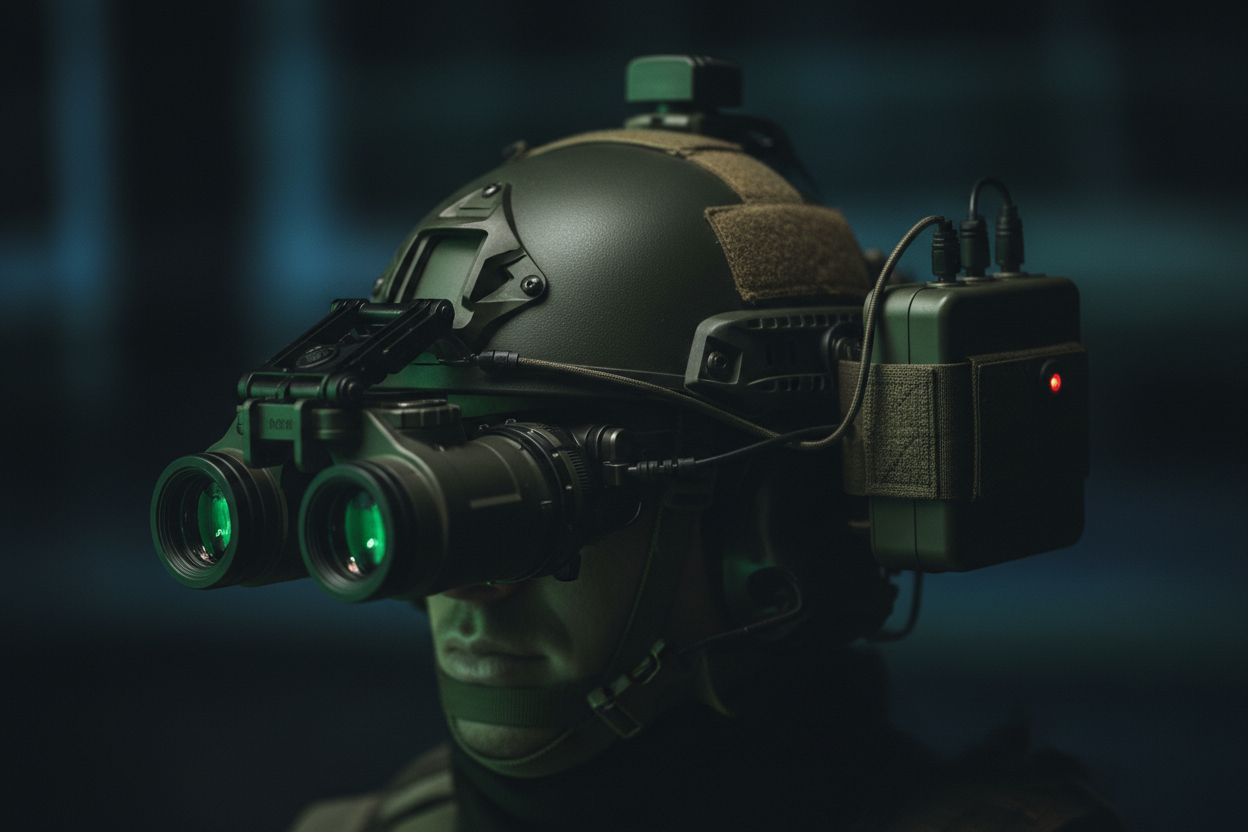
The helmet feels front-heavy.
This is one of the most common issues in night vision setups. Even a lightweight NVG can create forward pull when mounted in front of the face. Over time, this can lead to neck fatigue, poor comfort, unstable helmet balance, and reduced operational endurance.
That is why a rear-mounted battery pack or strobe battery pack is not just a power accessory.
It is also a helmet balance solution.
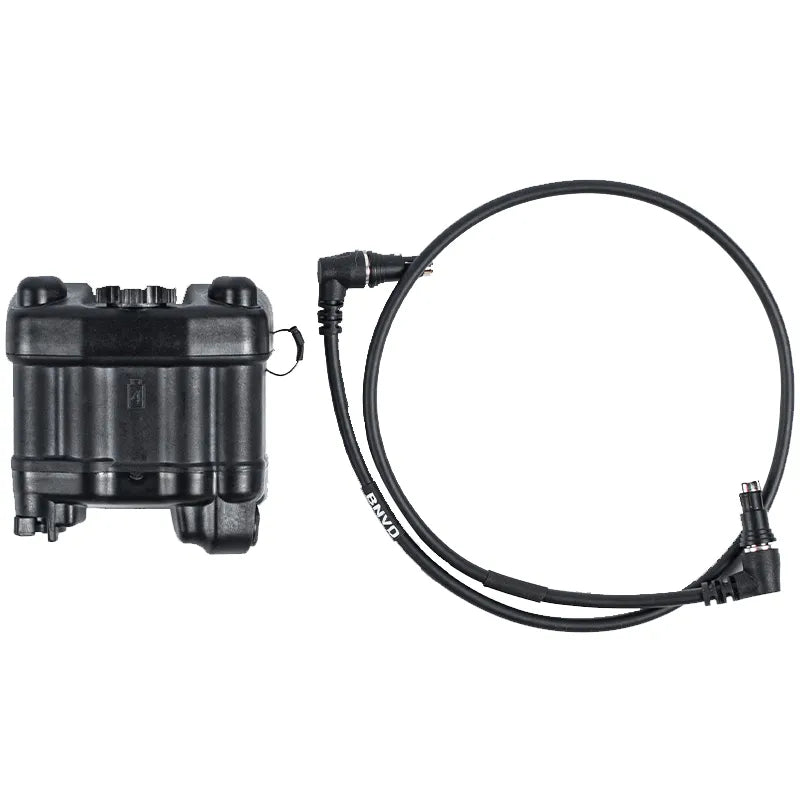
In this guide, the team at ARGUS Night Vision explains why NVG weight management matters, how a strobe battery pack helps balance your helmet, and why the ARGUS Universal Strobe Battery Pack (USBP) is a practical upgrade for professional night vision users.
Why Helmet Balance Matters in Night Vision Setups
Night vision devices are mounted in front of the eyes.
That means much of the system weight sits forward of the helmet’s centerline.
This forward weight creates leverage against the user’s neck.
The heavier the device, mount, and accessories are, the more noticeable this becomes.
Poor helmet balance can cause:
-
Neck fatigue
-
Head pressure
-
Reduced comfort
-
Poor posture
-
Helmet movement
-
Faster user exhaustion
-
Lower stability during movement
For short observation sessions, this may only feel uncomfortable.
For long training sessions, patrols, search operations, or tactical use, poor balance can become a serious performance problem.
The Physics Behind NVG Weight
Helmet-mounted night vision is not only about total weight.
It is also about where that weight sits.
A small amount of weight placed far in front of the helmet can feel much heavier because it creates rotational force.
This is why front-mounted NVGs often feel more tiring than their actual weight suggests.
The basic principle is torque:
In simple terms:
The farther the weight sits from your neck, the more leverage it creates.
A rear-mounted battery pack helps by adding weight behind the helmet, counteracting the forward pull of the NVG.
This does not make the total helmet system lighter, but it makes the load feel more balanced.
And in real-world use, balance often matters as much as total weight.
What Is a Strobe Battery Pack?
A strobe battery pack is a rear-mounted helmet accessory that can serve multiple purposes depending on the design.
It may provide:
-
External power for night vision devices
-
Rear helmet counterweight
-
Strobe or identification function
-
Cable management support
-
Improved helmet balance
-
Extended runtime for compatible devices
Instead of placing all system weight at the front, the battery pack distributes weight more evenly across the helmet.
This improves comfort and reduces the feeling of forward pull.
Why a Battery Pack Helps Helmet Balance
A rear battery pack works as a counterbalance.
When your NVG system pulls the helmet forward, rear-mounted weight helps pull the helmet back into a more neutral position.
This can improve:
1. Neck Comfort
A balanced helmet reduces the constant effort required to hold your head upright.
This can significantly reduce fatigue during extended use.
2. Helmet Stability
A front-heavy helmet may shift forward during movement.
A balanced system sits more securely and feels more controlled.
3. Long-Term Endurance
For users wearing NVGs for hours, balance can make the difference between tolerable and exhausting.
4. Movement Confidence
A better-balanced helmet makes it easier to walk, run, climb, kneel, scan, and operate in dynamic environments.
5. Overall System Feel
A balanced helmet feels more professional, more stable, and less distracting.
This allows the user to focus on the mission instead of constantly adjusting equipment.
Front-Heavy Setups: Common Causes
Several components can make a helmet feel front-heavy:
-
Dual-tube binocular NVGs
-
Panoramic night vision goggles
-
Heavy mounts
-
Clip-on thermal imagers
-
Objective lens accessories
-
IR illuminators
-
Protective lenses
-
Cables and adapters
-
Helmet shroud position
Even a lightweight monocular setup can become front-heavy after adding a mount and accessories.
This is why counterbalance planning should be part of the setup from the beginning.
Battery Pack vs Simple Counterweight
Some users solve helmet balance by adding a simple counterweight pouch.
This works, but a battery pack provides more practical value.
Simple Counterweight
Pros:
-
Low cost
-
Easy to install
-
Helps balance helmet weight
Cons:
-
Adds dead weight
-
Does not power equipment
-
No identification function
-
Limited system utility
Strobe Battery Pack
Pros:
-
Helps balance the helmet
-
Provides functional power support
-
May support identification or strobe functions
-
Helps organize the rear helmet setup
-
Adds useful weight instead of dead weight
Cons:
-
Higher cost
-
Requires compatibility planning
-
Adds cables if used for power output
For many users, a battery pack is a smarter solution because it turns counterweight into functional equipment.
Why Strobe Function Matters
A strobe function can be valuable in team environments.
Depending on the system and use case, a rear helmet strobe can help with:
-
Friend-or-foe recognition
-
Team identification
-
Low-light visibility
-
Training coordination
-
Search and rescue marking
-
Rear-position awareness
For professional users, identification is a major part of low-light safety.
A strobe battery pack can support both helmet balance and visual identification, making it more useful than a passive counterweight.
How External Power Improves NVG Use
Many night vision devices rely on onboard batteries.
This is simple and convenient, but external power can offer advantages.
A battery pack may help:
-
Extend runtime
-
Reduce frequent battery changes
-
Provide backup power
-
Support longer operations
-
Improve power management for helmet systems
For binocular or panoramic systems, external power becomes even more valuable because power consumption can be higher than simple monocular setups.
This is especially important for users running:
-
BNVD systems
-
PVS-31 style goggles
-
Panoramic night vision systems
-
Thermal fusion accessories
-
Extended training setups
The ARGUS Universal Strobe Battery Pack (USBP)
The ARGUS Universal Strobe Battery Pack (USBP) is designed as a practical rear helmet accessory for night vision users who want better balance, power support, and identification capability.
It is especially useful for users building a complete helmet-mounted NVG system.
Key advantages include:
-
Rear-mounted helmet balance support
-
External power functionality
-
Strobe / identification utility
-
Compatibility-focused design
-
Professional night vision accessory integration
-
Cleaner helmet system organization
Instead of adding unnecessary dead weight to the rear of the helmet, the ARGUS USBP gives users functional counterbalance.
That makes it a smarter upgrade for serious NVG setups.
Who Should Use a Strobe Battery Pack?
A strobe battery pack is recommended for:
Binocular NVG Users
Dual-tube systems often benefit from rear counterbalance because the front-mounted load is higher than a monocular setup.
PVS-31 Style Users
Lightweight binocular systems still create forward leverage, especially when paired with mounts and accessories.
BNVD Users
BNVD setups are commonly helmet-mounted for extended use, making balance and power management important.
Panoramic NVG Users
Quad-tube or panoramic systems have more front-end mass and can benefit strongly from rear balance support.
Tactical and Professional Users
Users who wear NVGs for long periods need better comfort, stability, and endurance.
Search and Rescue Teams
Long-duration missions benefit from extended power and better helmet balance.
Night Vision Enthusiasts
Advanced civilian users building complete helmet setups will notice a major improvement in comfort.
How to Set Up Helmet Balance Properly
A good helmet setup should feel stable, not front-heavy or rear-heavy.
When adjusting your setup, consider:
1. Start with Your NVG Installed
Balance the helmet with the actual device mounted.
Do not balance the helmet empty.
2. Add the Mount and Accessories
Include the mount, shroud, lens covers, COTI, lights, and cables you actually use.
3. Position the Battery Pack Low and Centered
Rear-mounted weight usually works best when placed securely and evenly.
4. Test Movement
Walk, turn your head, kneel, and look up and down.
The helmet should not slide forward or pull backward excessively.
5. Adjust Padding and Retention
Helmet pads and retention systems are just as important as counterweight.
A battery pack helps balance the load, but the helmet must still fit properly.
Signs Your Helmet Needs Better Balance
You may need a battery pack or counterweight if you notice:
-
Helmet sliding forward
-
Neck fatigue after short use
-
Chin strap pressure
-
Difficulty looking upward
-
Constant helmet adjustment
-
Front-heavy feeling when walking
-
NVG wobble during movement
-
Discomfort during longer sessions
These are common signs that the system is not balanced properly.
Strobe Battery Pack and Cable Management
If the battery pack powers your NVG, cable management becomes important.
Good cable routing should be:
-
Secure
-
Low-profile
-
Snag-resistant
-
Easy to inspect
-
Compatible with helmet accessories
Avoid loose cables that can catch on gear, branches, vehicle interiors, or weapon systems.
A clean cable path improves safety and keeps the helmet setup professional.
Does Every NVG Setup Need a Battery Pack?
Not always.
A simple handheld or short-duration PVS-14 setup may not require one.
However, a strobe battery pack becomes much more useful when:
-
The device is helmet-mounted
-
The setup feels front-heavy
-
You use binocular or panoramic NVGs
-
You train or operate for long periods
-
You need external power
-
You want rear identification capability
-
You want a cleaner professional helmet configuration
For serious users, it is one of the most practical upgrades available.
Common Mistakes When Managing NVG Weight
Mistake 1: Only Reducing Weight
Lightweight gear is good, but balance matters too.
A slightly heavier but balanced helmet can feel better than a lighter front-heavy helmet.
Mistake 2: Adding Dead Weight Only
A counterweight helps, but functional rear weight is usually better.
A strobe battery pack gives you balance plus utility.
Mistake 3: Ignoring Helmet Fit
Balance cannot fix a poorly fitted helmet.
Retention, padding, and sizing still matter.
Mistake 4: Forgetting Accessories
Users often balance the helmet before adding lights, cables, thermal devices, or protective lenses.
Balance the complete system, not just the base NVG.
Mistake 5: Poor Cable Routing
External power is useful, but loose cables can create safety and snag hazards.
The ARGUS Night Vision Perspective
At ARGUS Night Vision, we believe a reliable NVG setup is not built from one component alone.
It is a complete system.
A good helmet-mounted night vision system should include:
-
A capable NVG device
-
A stable mount
-
A secure helmet
-
Proper counterbalance
-
Reliable power management
-
Clean cable routing
-
Identification capability when needed
The ARGUS Universal Strobe Battery Pack (USBP) supports this system approach by helping users improve helmet balance while adding real functional value.
For users running modern NVG setups, especially binocular or professional systems, a strobe battery pack is not just an accessory.
It is a practical upgrade that improves comfort, endurance, and overall usability.
Final Thoughts
Managing NVG weight is one of the most important parts of building a comfortable helmet-mounted night vision setup.
A front-heavy helmet can cause fatigue, instability, and discomfort, even when the night vision device itself is high quality.
A rear-mounted strobe battery pack helps solve this problem by improving helmet balance, supporting external power, and adding identification functionality.
The ARGUS Universal Strobe Battery Pack (USBP) is designed for users who want more than a simple counterweight.
It helps turn rear helmet weight into useful capability.
If your NVG setup feels front-heavy, uncomfortable, or difficult to wear for extended periods, a strobe battery pack may be one of the most effective upgrades you can make.