
Cart
0
Introduction
When people build a night vision setup, they often focus first on the device itself.
They compare:
-
PVS-14 vs binocular night vision
-
White phosphor vs green phosphor
-
Gen 2 vs Gen 3 tubes
-
FOM, SNR, EBI, and halo
-
Thermal fusion accessories
-
Helmet systems and counterweights
But one critical component is often overlooked:
The NVG mount.
A night vision mount may look like a small accessory, but it directly affects comfort, stability, safety, and operational performance. Even the best night vision device can feel uncomfortable or unreliable if it is paired with the wrong mount.
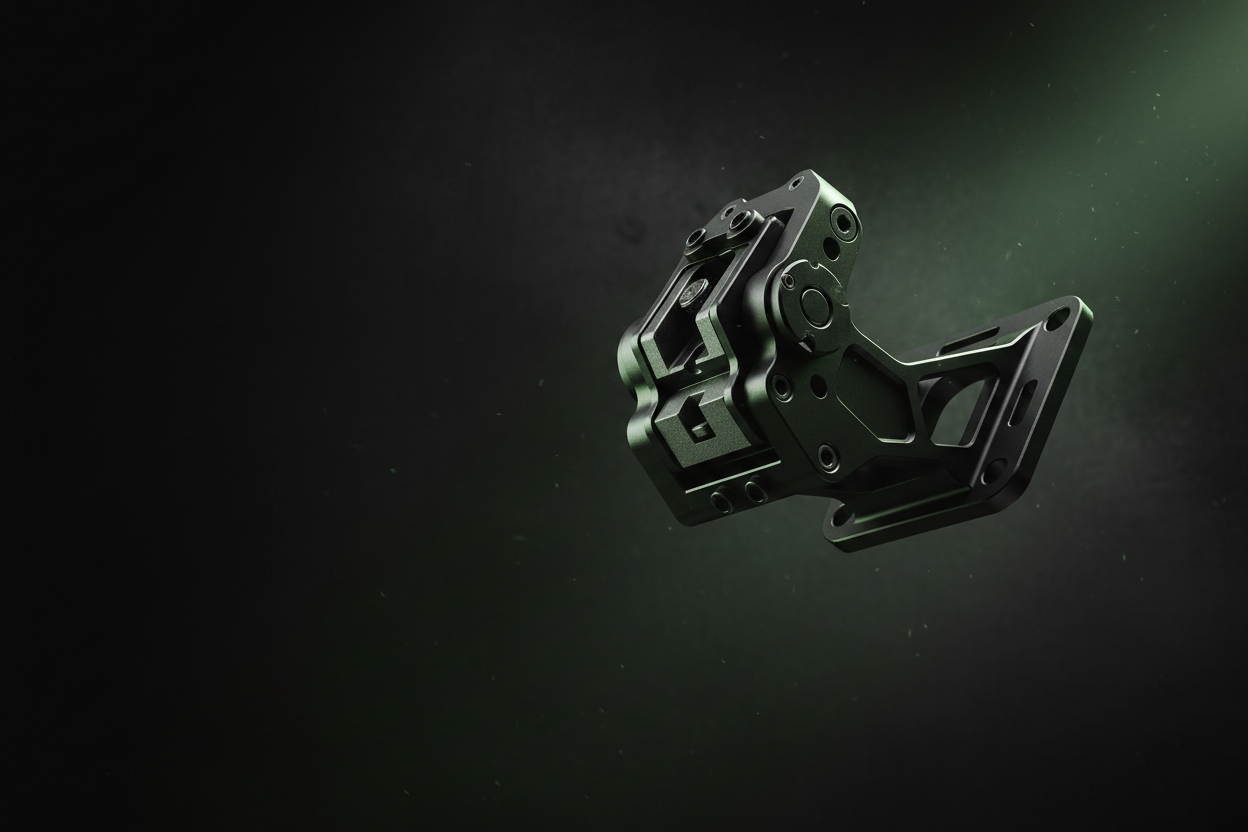
In this guide, the team at ARGUS Night Vision explains how to choose the right NVG mount and why the ARGUS A4 LWNVM Light Weight Night Vision Mount is designed for users who need a lightweight, stable, and professional helmet-mounted night vision solution.
What Is an NVG Mount?
An NVG mount is the connection system between your helmet and your night vision device.
Its job is simple but extremely important:
It holds your night vision device in the correct position in front of your eyes.
A good NVG mount allows the user to:
-
Attach and detach night vision devices quickly
-
Adjust eye relief and viewing position
-
Flip the device up when not in use
-
Maintain stability during movement
-
Reduce neck strain and helmet imbalance
-
Improve safety in demanding environments
For helmet-mounted night vision systems, the mount is one of the most important parts of the full setup.
Why the Right NVG Mount Matters
A night vision mount affects more than convenience.
It directly influences how usable your entire night vision system feels in real-world conditions.
Stability
If the mount is unstable, the night vision device may wobble during movement.
This can cause:
-
Visual distraction
-
Reduced image clarity
-
Faster fatigue
-
Lower confidence while moving
A stable mount keeps the optical system aligned with the user’s eyes.
Comfort
Helmet-mounted night vision adds weight to the front of the head.
If the mount is too heavy or poorly balanced, it can increase neck strain.
A lightweight mount helps reduce total helmet load and improves comfort during longer use.
Adjustability
Every user has different helmet setups, facial structure, eye position, and preferred viewing distance.
A good mount should allow precise adjustment so the device can sit naturally in front of the eyes.
Important adjustments include:
-
Fore-aft positioning
-
Vertical positioning
-
Tilt angle
-
Flip-up angle
Without proper adjustment, even high-end night vision devices can feel awkward.
Safety
In tactical, training, climbing, running, or parachuting environments, a mount should not become a hazard.
A safety release or breakaway function can help reduce the risk of injury if the device is caught by an external object.
This is especially important for professional users operating in dynamic environments.
Key Factors to Consider When Choosing an NVG Mount
Before buying an NVG mount, consider the following points.
1. Compatibility
The first question is simple:
Will the mount fit your night vision device?
Most modern professional night vision systems use a dovetail interface.
Common dovetail-compatible devices include:
-
PVS-14 with compatible dovetail arm
-
BNVD systems
-
PVS-31 style systems
-
BNVD-1431 style systems
-
Other modern binocular night vision devices
However, not all night vision devices use the same mounting standard.
Some older systems use bayonet-style interfaces.
Before purchasing any mount, confirm whether your device requires:
-
Dovetail mount
-
Bayonet mount
-
J-arm adapter
-
Bridge adapter
-
Specialized proprietary interface
The ARGUS A4 LWNVM is designed for dovetail-style night vision mounting, making it suitable for many modern professional helmet-mounted NVG setups.
2. Weight
Weight is one of the most important factors in a helmet-mounted night vision system.
A heavy mount may not seem like a big problem at first, but after long periods of use, every gram matters.
A lighter mount can help:
-
Reduce neck fatigue
-
Improve helmet balance
-
Make movement more comfortable
-
Reduce long-term strain
-
Improve user endurance
This is one of the core reasons behind the design of the ARGUS A4 LWNVM.
As a lightweight night vision mount, it is built to reduce unnecessary load while maintaining strong structural performance.
3. Adjustment Range
A good NVG mount should allow the user to position the device precisely.
Important adjustment types include:
Horizontal Adjustment
This helps align the device with the user’s eye position.
Vertical Adjustment
This allows the device to sit at the correct height.
Tilt Adjustment
This helps optimize the viewing angle and reduce strain.
Flip-Up Movement
This allows the user to move the device out of the viewing position when night vision is not needed.
The ARGUS A4 LWNVM is designed with multiple adjustment ranges, allowing users to fine-tune the position of their NVG setup for better comfort and usability.
4. Stability and Lock-Up
A quality mount should feel secure when locked into position.
Poor lock-up can lead to movement, vibration, or wobble.
This becomes especially noticeable when:
-
Running
-
Climbing
-
Driving
-
Conducting tactical training
-
Moving through rough terrain
A stable mount helps keep the image steady and reduces distractions.
For users relying on night vision in real conditions, stability is not optional—it is essential.
5. Flip-Up Function
Most helmet-mounted NVG systems need to be flipped up when not in use.
A good flip-up mechanism should be:
-
Smooth
-
Secure
-
Easy to operate
-
Reliable under movement
-
Intuitive with gloves
The flip-up function allows users to quickly transition between night vision use and normal vision without removing the device from the helmet.
This is especially useful during:
-
Indoor-to-outdoor transitions
-
Vehicle movement
-
Equipment checks
-
Communication tasks
-
Mixed-light environments
6. Safety Release / Breakaway Function
A safety release function is an important feature for demanding users.
If the night vision device or mount becomes caught on an external object, a breakaway-style design can help reduce the risk of neck injury or dangerous entanglement.
This matters during:
-
Parachuting
-
Fast movement
-
Rope work
-
Running
-
Tactical training
-
Movement through tight spaces
The ARGUS A4 LWNVM includes a safety release function designed to improve user safety in high-movement environments.
7. Material and Durability
NVG mounts are exposed to stress, impact, weather, and repeated movement.
For professional use, material quality matters.
A strong mount should offer:
-
High structural strength
-
Resistance to wear
-
Reliable locking performance
-
Long service life
-
Stability under field conditions
The ARGUS A4 LWNVM uses high-strength aerospace aluminum alloy, giving it a balance of lightweight construction and rugged durability.
ARGUS A4 LWNVM: Key Features
The ARGUS A4 LWNVM Light Weight Night Vision Mount is designed for users who need a professional helmet-mounted night vision solution with reduced weight and strong adjustability.
Key features include:
-
Lightweight construction
-
Dovetail-style interface
-
Multiple adjustment ranges
-
Flip-up functionality
-
Safety release function
-
High-strength aerospace aluminum alloy construction
-
Ergonomic design for easier operation
-
Low-profile structure for helmet-mounted use
This makes it suitable for users who want a mount that balances performance, weight, safety, and field usability.
Who Is the ARGUS A4 LWNVM Best For?
The ARGUS A4 LWNVM is a strong option for:
Tactical Users
Users who need a stable and adjustable mount for training, field movement, and professional operations.
Law Enforcement Professionals
Teams requiring dependable helmet-mounted night vision setups for surveillance, search, and tactical response.
Military and Security Users
Professionals who prioritize lightweight equipment, durability, and safety features.
Night Vision Enthusiasts
Advanced civilian users who want a more professional setup than basic entry-level mounting systems.
BNVD and PVS-14 Users
Users running dovetail-compatible monocular or binocular night vision systems.
ARGUS A4 LWNVM vs Basic NVG Mounts
Basic NVG mounts may be affordable, but they often have limitations.
Common issues include:
-
More wobble
-
Less precise adjustment
-
Heavier construction
-
Weaker ergonomics
-
Fewer safety features
-
Less durable materials
The ARGUS A4 LWNVM is designed to provide a more refined mounting experience, especially for users who operate for longer periods or in more demanding environments.
ARGUS A4 LWNVM vs Traditional Heavy Mounts
Older or heavier mounts may be strong, but they can add unnecessary load to the helmet.
This can lead to:
-
Neck fatigue
-
Poor helmet balance
-
Discomfort during long use
-
Increased need for counterweight
The ARGUS A4 LWNVM focuses on weight reduction while maintaining the reliability needed for night vision use.
For users building a modern lightweight helmet setup, this can be a major advantage.
How to Know If You Need a Better NVG Mount
You may need to upgrade your mount if you experience:
-
Noticeable wobble
-
Poor eye alignment
-
Neck fatigue
-
Difficult flip-up operation
-
Unstable lock-up
-
Limited adjustment range
-
Poor compatibility with your current helmet setup
A mount upgrade can significantly improve the feel of your entire night vision system.
In many cases, users notice the improvement immediately because the device becomes easier to position, more stable, and more comfortable to wear.
Building a Complete Helmet-Mounted NVG Setup
A night vision mount is only one part of the full system.
For best results, consider the complete setup:
-
Helmet
-
Shroud
-
NVG mount
-
Night vision device
-
Dovetail adapter or arm
-
Battery pack
-
Counterweight
-
Retention lanyard
-
IR illuminator or task light
The mount sits at the center of this system.
It connects the helmet to the optic and determines how naturally the device sits in front of the user’s eyes.
This is why choosing a quality mount is so important.
Common Mistakes When Choosing an NVG Mount
Mistake 1: Only Looking at Price
A low-cost mount may save money upfront, but poor stability or weak adjustment can make the entire setup frustrating.
Mistake 2: Ignoring Compatibility
Always confirm whether your device uses dovetail or bayonet mounting.
Mistake 3: Overlooking Weight
A few extra grams may not seem important, but helmet-mounted weight adds up quickly.
Mistake 4: Forgetting Safety Features
For dynamic movement, a safety release function can be an important protective feature.
Mistake 5: Not Considering Long-Term Comfort
A mount should feel comfortable not only for five minutes, but for the full duration of your use case.
The ARGUS Night Vision Perspective
At ARGUS Night Vision, we believe a good NVG mount should do more than simply hold a device in place.
It should improve the entire night vision experience.
That means:
-
Better stability
-
Better comfort
-
Better adjustability
-
Better safety
-
Better operational confidence
The ARGUS A4 LWNVM was designed with these priorities in mind.
For users building a professional night vision setup, the mount is not an accessory to overlook. It is a core part of the system.
Final Thoughts
Choosing the right NVG mount is essential for building a reliable and comfortable night vision setup.
A quality mount improves stability, positioning, safety, and user comfort.
The ARGUS A4 LWNVM Light Weight Night Vision Mount is designed for users who need a lightweight, adjustable, and durable helmet-mounted solution for modern night vision devices.
Whether you are using a PVS-14, BNVD-style system, or another dovetail-compatible night vision device, the right mount can make your equipment feel more natural, secure, and mission-ready.
If you want to build a stronger night vision setup, do not focus only on the tube or the housing.
Start with the full system—and make sure your mount is ready for the job.