
Cart
0
Introduction
Night vision technology has traditionally relied on one core principle: amplifying available light through image intensifier tubes.
However, even the most advanced Gen 3 night vision systems have one fundamental limitation:
They cannot detect heat.
This is where thermal fusion technology changes the game.
Devices such as Clip-On Thermal Imagers (COTI) overlay thermal information onto traditional night vision goggles, combining two different sensing technologies into one unified visual experience.
In this article, the team at ARGUS Night Vision explains how thermal fusion works, what COTI devices do, and why they are becoming a critical upgrade for professional night vision users.
What Is Thermal Fusion Night Vision?
Thermal fusion night vision is a system that combines:
-
Image intensifier night vision (I²)
-
Thermal imaging sensors
The result is a hybrid visual system that allows users to see:
-
Light-amplified details (from NVGs)
-
Heat signatures (from thermal imaging)
Instead of choosing between night vision or thermal, fusion systems allow both to be used simultaneously.
This dramatically improves situational awareness in complex environments.
What Is a COTI (Clip-On Thermal Imager)?
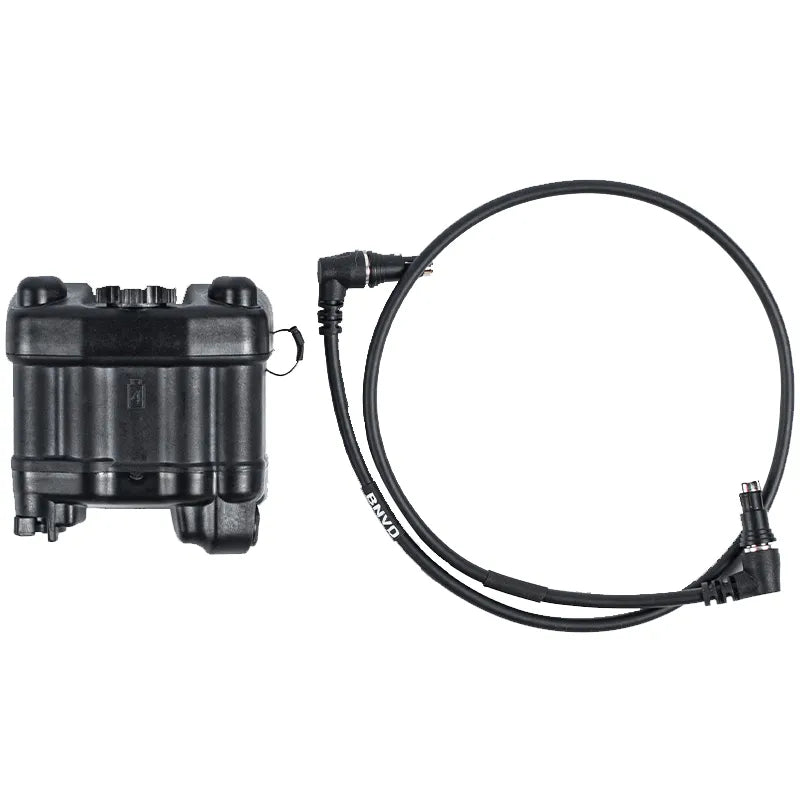
A COTI (Clip-On Thermal Imager) is a small thermal device that attaches to night vision goggles.
It projects thermal information directly into the user’s night vision field of view.
Key features include:
-
Helmet-mounted thermal overlay
-
Real-time heat detection
-
Lightweight modular design
-
Compatibility with NVGs like PVS-14 and BNVD systems
-
Minimal impact on user mobility
Unlike standalone thermal scopes, COTI systems do not replace night vision—they enhance it.
How COTI Works with Night Vision
COTI systems work by projecting a thermal overlay into the eyepiece of night vision goggles.
The process can be broken down into three layers:
1. Image Intensifier Layer (Night Vision)
The NVG continues to amplify ambient light using:
-
Photocathode
-
Microchannel plate
-
Phosphor screen
This provides structural visual detail such as:
-
Terrain
-
Buildings
-
Trees
-
Obstacles
2. Thermal Detection Layer
The COTI sensor detects infrared radiation emitted by objects.
It identifies:
-
Human body heat
-
Vehicle engines
-
Recently used weapons
-
Warm objects hidden in darkness or foliage
3. Fusion Overlay Layer
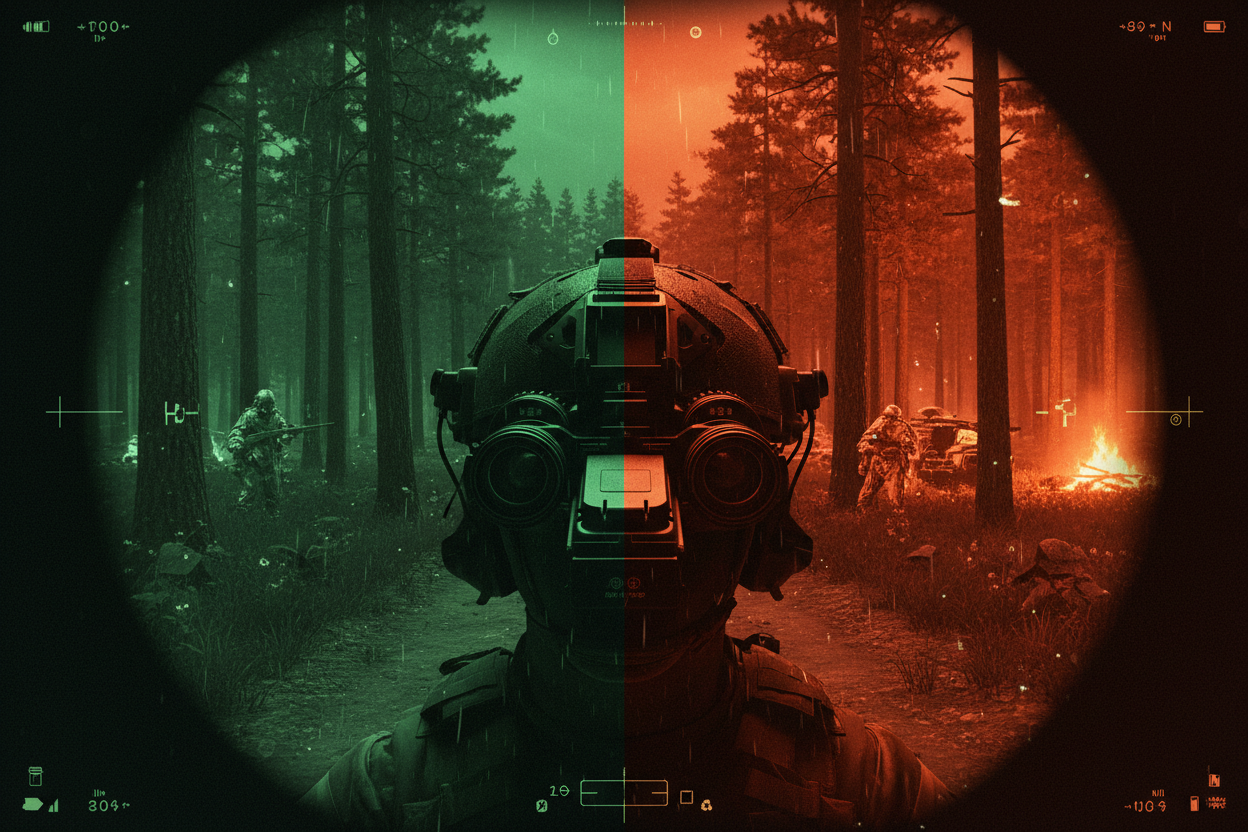
The thermal information is projected onto the NVG image as a colored overlay.
This creates a combined visual output where:
-
NVG shows shape, depth, and detail
-
Thermal highlights heat signatures
The result is significantly improved detection capability.
Why Thermal Fusion Is a Game Changer
Traditional night vision has one major weakness:
It cannot distinguish living targets from background objects in complete darkness.
Thermal imaging solves this—but lacks detail and depth perception.
Thermal fusion solves both problems at the same time.
Key advantages include:
-
Faster target detection
-
Improved threat identification
-
Better camouflage penetration
-
Enhanced situational awareness
-
Reduced decision-making time
In tactical environments, this combination can be decisive.
COTI vs Traditional Night Vision
Standard Night Vision (NVGs)
Pros:
-
High detail in low light
-
Good depth perception
-
Real-time motion clarity
Cons:
-
Cannot detect heat
-
Limited performance in total darkness
-
Difficulty identifying hidden targets
COTI Thermal Fusion System
Pros:
-
Detects heat signatures instantly
-
Works in total darkness
-
Improves target recognition
-
Enhances situational awareness
Cons:
-
Adds system complexity
-
Requires power management
-
Slight increase in weight
-
Higher cost
Winner: Depends on mission requirements, but fusion systems are superior in complex environments.
Best NVGs for COTI Integration
Thermal fusion systems are commonly paired with:
-
PVS-14 monocular systems
-
PVS-31 binocular systems
-
BNVD platforms (including BNVD-1431 MK2)
These systems are compatible because they support:
-
Helmet mounting
-
Standard optical geometry
-
Modular accessory integration
In modern setups, NVGs + COTI is often considered a tier-one configuration.
Real-World Tactical Advantages
1. Detecting Hidden Targets
Thermal fusion allows users to see:
-
People behind light cover
-
Camouflaged movement
-
Hidden heat sources in vegetation
2. Urban Operations
In urban environments, thermal fusion helps identify:
-
Heat signatures behind windows
-
Occupants inside dark rooms
-
Movement in shadowed areas
3. Outdoor and Wilderness Use
For hunting or search operations:
-
Animals are easily detected
-
Human presence is highlighted instantly
-
Tracking becomes significantly easier
4. Reduced Reaction Time
By combining NVG detail with thermal detection, users can:
-
Identify threats earlier
-
Make faster decisions
-
React more effectively in dynamic situations
Limitations of COTI Systems
Despite their advantages, COTI systems are not perfect.
1. Battery Dependency
Thermal fusion requires additional power management.
2. Image Complexity
Some users may experience:
-
Visual clutter
-
Overlapping signals
-
Learning curve during adaptation
3. Cost
COTI systems significantly increase overall night vision system cost.
4. Environmental Sensitivity
Thermal performance may vary based on:
-
Weather conditions
-
Ambient temperature
-
Humidity levels
Is Thermal Fusion Worth It?
Thermal fusion is not necessary for every user.
However, it becomes extremely valuable for:
-
Military personnel
-
Tactical operators
-
Law enforcement units
-
High-risk security teams
-
Advanced night vision users
-
Search and rescue operations
For these users, COTI systems can significantly enhance operational effectiveness.
The ARGUS Night Vision Perspective
At ARGUS Night Vision, we view thermal fusion as one of the most important advancements in modern low-light technology.
While traditional image intensifier systems like PVS-14 and BNVD-1431 MK2 remain highly effective, they are limited by one factor: they cannot detect heat.
COTI systems bridge this gap by combining two complementary technologies into a single operational picture.
For users operating in complex environments where threat detection speed matters, thermal fusion represents a significant capability upgrade.
Final Thoughts
Thermal fusion night vision, powered by Clip-On Thermal Imagers (COTI), represents the next evolution in night vision capability.
By combining image intensification with thermal detection, users gain:
-
Better awareness
-
Faster detection
-
Improved target recognition
-
Greater operational confidence
While not required for all applications, COTI systems are rapidly becoming a standard upgrade for professional night vision users who demand maximum performance.
As night vision technology continues to evolve, thermal fusion stands out as one of the most powerful enhancements available today.