
Cart
0
Introduction
For decades, traditional night vision devices have provided military personnel, law enforcement officers, and tactical professionals with the ability to operate effectively in darkness. Systems such as the PVS-14 and PVS-31 have become industry standards, offering reliable low-light performance and enhanced situational awareness.
However, one limitation has always remained:
Field of View (FOV).
Most conventional night vision goggles provide approximately 40 degrees of horizontal field of view. While this is significantly better than the naked eye in darkness, it still creates a "looking through a tube" effect that can limit peripheral awareness.
This challenge led to the development of Panoramic Night Vision Goggles (PNVGs), including the widely recognized PNVG-18 platform.
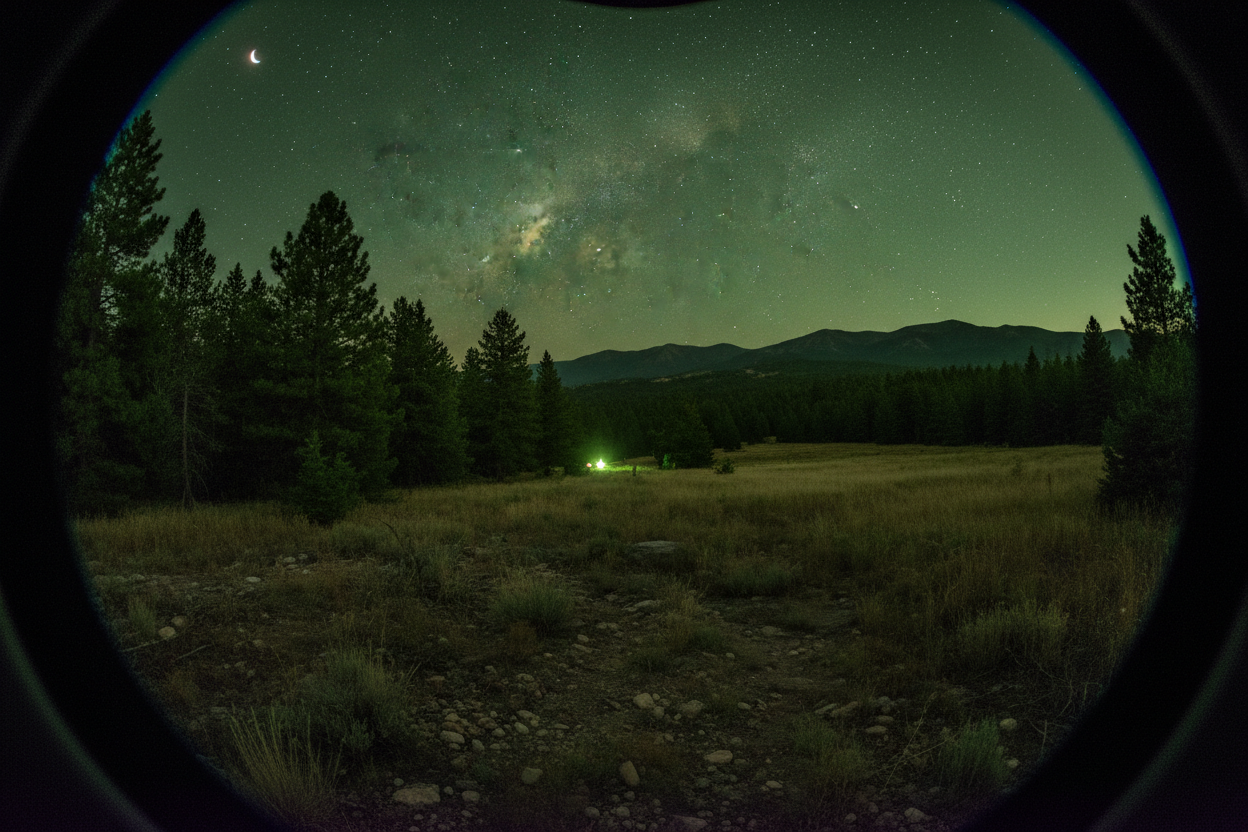
By expanding the user's field of view from 40° to approximately 97°, panoramic night vision systems fundamentally change how operators perceive and navigate their environment.
In this article, the team at ARGUS Night Vision explores why 97° FOV has become one of the most significant advancements in modern night vision technology.
Understanding Field of View in Night Vision
Field of View refers to the width of the visible area that a user can observe through an optical device without moving their head.
A wider field of view provides:
-
Better peripheral awareness
-
Faster target detection
-
Improved navigation
-
Enhanced situational understanding
Most traditional night vision devices offer:
Standard Night Vision FOV
-
PVS-14: approximately 40°
-
PVS-31: approximately 40°
-
BNVD systems: approximately 40°
This design has served military and law enforcement users for decades, but it represents only a fraction of normal human peripheral vision.
Human vision naturally covers well over 180 degrees horizontally.
Even though traditional night vision amplifies available light, it significantly reduces the amount of terrain visible at any given moment.
What Is Panoramic Night Vision?
Panoramic Night Vision expands the observable area by utilizing multiple image intensifier tubes arranged at different viewing angles.
Instead of presenting a single 40° image, panoramic systems merge several images together to create a dramatically wider visual experience.
The most recognized example is the PNVG-18.
Key characteristics include:
-
Four image intensifier tubes
-
Panoramic optical arrangement
-
Approximately 97° horizontal field of view
-
Enhanced peripheral vision
-
Improved spatial awareness
The result is a night vision experience that feels far more natural than traditional systems.
Why 97° FOV Matters
At first glance, increasing field of view from 40° to 97° may seem like a simple numerical improvement.
In reality, it transforms the way operators interact with their environment.
A 97° field of view provides more than double the observable area compared to traditional night vision systems.
This means users can:
-
Detect threats sooner
-
Observe larger areas without head movement
-
Maintain awareness of teammates
-
Navigate obstacles more efficiently
-
Process environmental information faster
For tactical operators, these advantages can significantly improve mission effectiveness.
Enhanced Situational Awareness
Situational awareness is one of the most critical factors in nighttime operations.
Traditional night vision often requires users to constantly scan their surroundings by moving their head.
This continuous scanning can:
-
Increase fatigue
-
Slow reaction times
-
Create blind spots
-
Reduce operational efficiency
With panoramic night vision, much more information is available within the user's immediate field of view.
Operators spend less time searching and more time processing.
This expanded awareness can be particularly valuable in:
-
Urban environments
-
Vehicle operations
-
Dynamic tactical scenarios
-
Team-based missions
Faster Target Detection
Target acquisition is heavily influenced by peripheral vision.
A wider field of view enables users to identify movement outside the central viewing area.
Potential threats can be detected earlier because they enter the visible field sooner.
This can provide valuable additional reaction time during:
-
Security operations
-
Military patrols
-
Law enforcement missions
-
Search and rescue deployments
In high-pressure environments, even a fraction of a second can make a difference.
Improved Mobility and Navigation
One of the most noticeable advantages of panoramic night vision is easier movement.
Users often report that traditional 40° systems feel restrictive when:
-
Walking
-
Running
-
Climbing
-
Driving
-
Navigating uneven terrain
The wider field of view provided by a PNVG system helps users better understand their surroundings.
Benefits include:
-
More natural movement
-
Reduced tunnel vision
-
Better obstacle recognition
-
Improved depth awareness
-
Greater confidence during navigation
Many operators describe panoramic systems as feeling significantly closer to natural human vision.
Reduced Head Movement
Traditional night vision users frequently compensate for limited FOV by constantly turning their head.
Over long periods, this can contribute to:
-
Neck strain
-
Fatigue
-
Reduced comfort
A 97° field of view minimizes the need for excessive scanning.
Users can observe more of their environment while maintaining a forward-facing posture.
This can improve both comfort and operational effectiveness during extended missions.
The Technology Behind PNVG-18
The PNVG-18 achieves its expanded field of view through a sophisticated four-tube architecture.
Unlike dual-tube systems such as the PVS-31, panoramic goggles use:
-
Two central image intensifier tubes
-
Two outward-facing tubes
The outer tubes capture additional peripheral imagery, creating the panoramic effect.
This design dramatically increases visual coverage while preserving image quality.
Modern panoramic systems often incorporate:
-
White phosphor technology
-
Auto-gated image intensifier tubes
-
Lightweight materials
-
Advanced power management systems
These technologies help maximize performance while minimizing operator burden.
PNVG-18 vs PVS-31
One of the most common comparisons in professional night vision is between the PNVG-18 and the PVS-31.
Field of View
PVS-31:
-
Approximately 40°
PNVG-18:
-
Approximately 97°
Winner: PNVG-18
Situational Awareness
PVS-31:
-
Excellent
PNVG-18:
-
Outstanding
Winner: PNVG-18
Weight
PVS-31:
-
Lighter
PNVG-18:
-
Heavier due to additional tubes
Winner: PVS-31
Cost
PVS-31:
-
More affordable
PNVG-18:
-
Significantly more expensive
Winner: PVS-31
Tactical Capability
PVS-31:
-
Exceptional
PNVG-18:
-
Elite-level performance
Winner: PNVG-18
Are There Any Drawbacks?
While panoramic night vision offers remarkable advantages, it is not without trade-offs.
Potential limitations include:
Higher Cost
Four image intensifier tubes significantly increase system cost.
Increased Weight
Additional optics and electronics add weight compared to dual-tube systems.
Greater Complexity
More components mean more sophisticated maintenance requirements.
Specialized Applications
Not every user requires a 97° field of view.
For many recreational users, a traditional PVS-14 or PVS-31 may provide sufficient performance.
Who Benefits Most from Panoramic Night Vision?
Panoramic systems are particularly valuable for:
Military Special Operations
Maximum situational awareness is often critical during complex missions.
Tactical Teams
Enhanced peripheral vision improves team coordination and threat detection.
Vehicle Operators
A wider field of view helps maintain awareness while moving.
Search and Rescue Professionals
Faster area scanning can improve search efficiency.
Advanced Night Vision Enthusiasts
Experienced users seeking the highest level of night vision capability often gravitate toward panoramic systems.
The ARGUS Night Vision Perspective
At ARGUS Night Vision, we view panoramic night vision as one of the most significant advancements in modern night vision technology.
While traditional systems such as the PVS-14 and PVS-31 continue to provide exceptional performance, panoramic platforms demonstrate what becomes possible when field of view limitations are dramatically expanded.
For professional users operating in demanding environments, the ability to see more, react faster, and maintain greater situational awareness can provide a meaningful operational advantage.
As night vision technology continues to evolve, panoramic systems are helping redefine expectations for what users can achieve after dark.
Final Thoughts
The transition from a 40° field of view to approximately 97° represents far more than a simple specification upgrade.
Panoramic night vision fundamentally changes how users perceive and interact with their environment.
By improving peripheral awareness, navigation, target detection, and overall situational understanding, systems like the PNVG-18 offer capabilities that traditional night vision devices simply cannot match.
For professionals seeking the highest level of nighttime performance, panoramic night vision remains one of the most exciting and impactful innovations in the industry today.