
Cart
0
Introduction
Most traditional night vision devices give users around 40 degrees of field of view.
That includes many common systems such as:
-
PVS-14 monoculars
-
PVS-31 style binoculars
-
BNVD systems
-
Other standard dual-tube NVGs
For many users, 40 degrees is enough.
It allows you to move, observe, navigate, and operate in darkness with much better awareness than the naked eye.
But once users start comparing panoramic night vision systems, a new question appears:
Is a wider field of view worth the investment?
The PNVG-18 housing kit is designed for users who want a panoramic night vision experience. Instead of using one or two image intensifier tubes, a PNVG-style system uses four tubes to dramatically expand the visible field.
In this guide, we explain what 97-degree panoramic field of view means, how PNVG-18 style systems differ from traditional NVGs, who benefits most from panoramic night vision, and whether the PNVG-18 Housing Kit with Lenses is worth the investment.
What Is a PNVG-18 Housing Kit?
A PNVG-18 housing kit is the core body and optical housing system used to build a panoramic night vision device.
Unlike standard monocular or binocular NVGs, a PNVG-style system is built around four optical channels.
A typical panoramic system includes:
-
Two central forward-facing tubes
-
Two outer angled tubes
-
Panoramic optical alignment
-
Quad-tube housing structure
-
External power support
-
Specialized collimation requirements
-
Helmet-mounted operation
The goal is simple:
Give the user a much wider field of view than standard 40-degree night vision systems.
The PNVG-18 Housing is designed for users who want to build a panoramic NVG system around a dedicated quad-tube housing platform.
Why Field of View Matters in Night Vision
Field of view, often written as FOV, describes how much of the environment you can see through the device without moving your head.
A wider field of view helps users:
-
See more of the environment
-
Reduce excessive head scanning
-
Improve peripheral awareness
-
Detect movement sooner
-
Navigate tight spaces more naturally
-
Track teammates or objects more easily
-
Improve confidence while moving
Standard night vision gives strong low-light capability, but the narrow FOV can create a “tunnel vision” effect.
This is one reason panoramic night vision systems attract serious users.
They do not simply make the image brighter.
They change how much of the scene the user can process at once.
40-Degree NVGs vs 97-Degree Panoramic NVGs
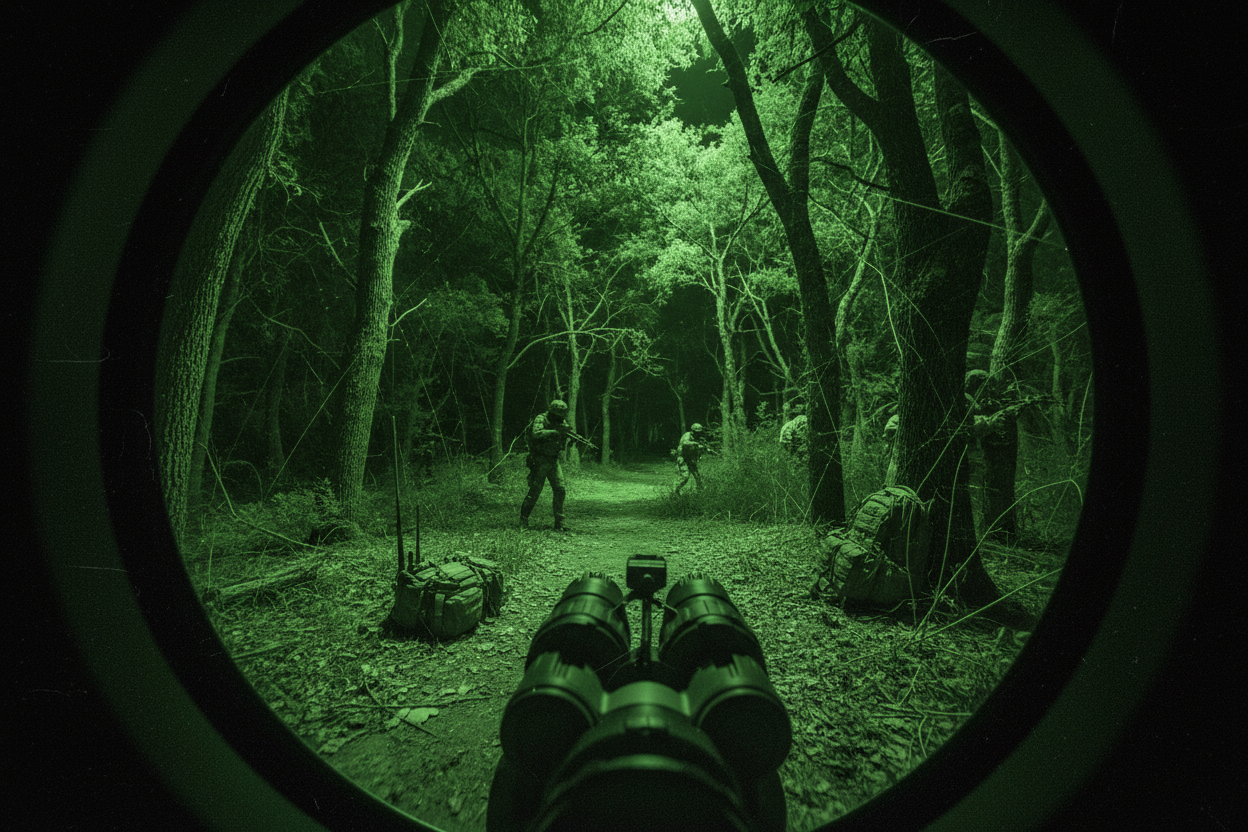
Most standard NVGs offer around 40 degrees of field of view.
A panoramic system can expand that field dramatically.
Standard 40-Degree NVGs
Standard NVGs are best for:
-
General navigation
-
Helmet-mounted use
-
Lower weight
-
Lower cost
-
Simpler setup
-
Easier tube matching
-
More practical everyday use
They are widely used because they provide an excellent balance of performance, cost, and usability.
97-Degree Panoramic NVGs
Panoramic NVGs are best for:
-
Maximum situational awareness
-
Close-quarters movement
-
Vehicle operation
-
Team-based movement
-
Complex terrain
-
Advanced users
-
Users who prioritize peripheral vision
The difference is not subtle.
A panoramic system gives the user far more visual information without requiring constant head movement.
For users comparing traditional binocular setups, you may also want to read PVS-14 vs PVS-31: Which Night Vision Device Is Right for You?.
How Panoramic Night Vision Works
A standard binocular night vision system uses two tubes.
Each tube points forward.
This gives both eyes night vision and improves depth perception compared to a monocular system.
A panoramic night vision system uses four tubes.
The two center tubes provide the main forward view.
The two outer tubes are angled outward to expand peripheral vision.
This creates a much wider visual image.
The user sees a broader scene that feels less restricted than standard 40-degree NVGs.
This design is especially useful when the user needs to monitor a wide environment while moving.
Why PNVG-18 Uses Four Image Intensifier Tubes
A wider field of view cannot be achieved simply by stretching the image.
If a standard image were stretched wider, resolution and clarity would suffer.
Instead, a PNVG-style system uses multiple image intensifier tubes to expand the field while preserving useful image detail.
The four-tube architecture helps provide:
-
Wider peripheral view
-
Stronger scene coverage
-
Better close-range awareness
-
More natural scanning
-
Improved motion detection
-
Reduced tunnel vision
However, four tubes also increase cost, weight, assembly complexity, and matching requirements.
That is why a PNVG-18 housing kit is not for every user.
It is a specialized platform for users who truly benefit from panoramic awareness.
PNVG-18 vs Standard Binocular NVGs
A standard binocular NVG such as a PVS-31 style system or BNVD system is often the best choice for most users.
It offers:
-
Dual-eye viewing
-
Good depth perception
-
Lower weight than quad-tube systems
-
Lower cost
-
Easier maintenance
-
Simpler power management
-
More practical helmet balance
A PNVG-18 style system offers a different advantage:
-
Much wider field of view
That advantage is powerful, but it comes with trade-offs.
PNVG-18 Advantages
-
Wider peripheral awareness
-
Better close-quarters visibility
-
Faster movement detection
-
Reduced need for head scanning
-
Stronger situational awareness
-
More immersive viewing experience
PNVG-18 Trade-Offs
-
Higher cost
-
More weight
-
Four tubes required
-
More complex assembly
-
Greater tube matching requirements
-
More power demand
-
More specialized use case
For users comparing modern binocular platforms, read BNVD-1431 MK2 vs Traditional NVGs: A Comprehensive Review.
Is 97-Degree Field of View Actually Useful?
Yes, but it depends on the use case.
A wider field of view is most useful when peripheral awareness matters.
This includes:
-
Moving through buildings
-
Driving or riding in vehicles
-
Navigating dense terrain
-
Working around teammates
-
Monitoring a wide area
-
Close-range movement
-
Dynamic training environments
-
Situations where scanning speed matters
In open terrain, a standard binocular NVG may be enough.
In close quarters, dense environments, or vehicle-based movement, panoramic FOV can feel like a major upgrade.
The key question is not whether 97-degree FOV is better on paper.
The real question is whether your use case benefits enough to justify the cost and complexity.
The Biggest Advantage: Situational Awareness
The strongest reason to choose a panoramic night vision system is situational awareness.
With standard NVGs, users often compensate for narrow FOV by constantly turning their head.
This works, but it takes effort.
It can also create blind spots.
A panoramic system gives the user more visual information immediately.
This can help with:
-
Detecting movement at the edge of vision
-
Tracking teammates
-
Moving through obstacles
-
Watching doorways or corners
-
Reducing scanning fatigue
-
Making faster visual decisions
In night vision, awareness is often just as important as raw image quality.
A wider FOV can give users more time to react.
Better Close-Quarters Movement
Panoramic night vision is especially valuable in close spaces.
In close-quarters environments, objects and movement can appear from the sides quickly.
A wider FOV helps the user see more without turning the head as much.
This can improve:
-
Room movement
-
Hallway navigation
-
Vehicle entry and exit
-
Obstacle avoidance
-
Team positioning
-
Short-range scanning
A standard 40-degree NVG can still work well, but it requires more head movement.
A PNVG-style system makes the visual experience feel more open.
Vehicle and Mobility Use
Panoramic night vision can be valuable for vehicle operation and mobility tasks.
A wider field helps users see more of the surrounding environment while facing forward.
This can help with:
-
Driving
-
Riding
-
Convoy movement
-
Vehicle approaches
-
Side awareness
-
Obstacle detection
-
Faster visual scanning
This does not mean every driver or vehicle user needs PNVG-18.
But if movement speed and peripheral awareness matter, panoramic FOV becomes more valuable.
The Main Trade-Off: Weight
A PNVG-18 style system uses four tubes and a larger housing.
That means it is naturally heavier than most dual-tube binocular systems.
Weight matters because helmet-mounted equipment creates leverage on the neck.
A heavier front-mounted system can increase:
-
Neck fatigue
-
Helmet imbalance
-
Need for counterweight
-
Long-duration discomfort
-
User fatigue
If you invest in panoramic NVGs, you should also plan the full helmet setup.
That may include:
-
A stable mount
-
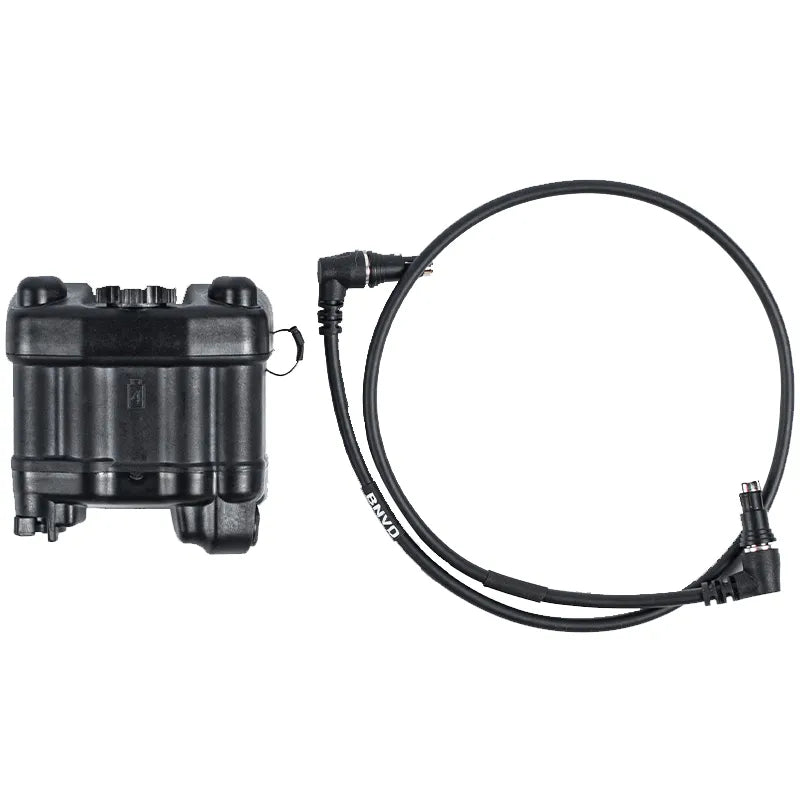
External battery pack
-
Rear counterweight
-
Proper helmet padding
-
Secure retention system
-
Good cable management
For more on this topic, read Managing NVG Weight: Why You Need a Strobe Battery Pack for Helmet Balance.
Power Management Matters
A quad-tube NVG system requires more power planning than a simple monocular or standard binocular system.
Because four image intensifier tubes are used, external power support becomes especially important.
A rear-mounted battery pack can help in two ways:
First, it supports longer runtime.
Second, it helps balance the front-heavy helmet setup.
For users building a PNVG-18 system, power and balance should be considered part of the same setup.
You can browse related power and helmet accessories through the Accessories collection.
Why Tube Matching Is Critical
A PNVG-18 style system requires four image intensifier tubes.
This makes tube selection more complex.
In a standard monocular, only one tube matters.
In a binocular system, two tubes must be reasonably matched.
In a quad-tube panoramic system, four tubes must work together.
Important matching factors include:
-
FOM
-
SNR
-
Resolution
-
Gain
-
EBI
-
Halo
-
Phosphor color
-
Brightness
-
Tube cosmetics
-
Image tone
-
Response behavior
If the tubes are poorly matched, the panoramic image may feel uneven.
The user may notice brightness differences, contrast differences, or visual discomfort between the center and side views.
That is why tube selection is a major part of building a good panoramic NVG system.
You can compare tube options through the Image Intensifier Tube collection.
PNVG-18 and Collimation
Collimation is critical in any binocular night vision system.
It becomes even more important in a panoramic system.
Because multiple optical channels must align properly, assembly quality matters.
Poor collimation can cause:
-
Eye strain
-
Visual discomfort
-
Image mismatch
-
Reduced usability
-
Headaches during long sessions
-
Poor depth perception
-
Less natural viewing
A PNVG-style system is not a simple DIY upgrade for most users.
It requires careful assembly, proper tools, tube matching, and optical alignment.
If you are considering a housing kit, make sure the builder or technician understands panoramic collimation.
PNVG-18 Housing Kit vs Fully Built System
A housing kit is not the same as a complete night vision device.
The housing kit gives you the platform.
You still need the complete build to include:
-
Four image intensifier tubes
-
Optics
-
Battery system
-
Mounting setup
-
Assembly
-
Collimation
-
Testing
-
Lens protection
-
Case and accessories
Some users prefer housing kits because they want control over tube selection and build quality.
Others prefer fully built systems because they want a ready-to-use device.
Choose a Housing Kit If:
-
You understand tube selection
-
You have access to a qualified builder
-
You want control over the final tube specs
-
You want to build a custom panoramic system
-
You are comfortable with a more complex project
Choose a Complete System If:
-
You want a ready-to-use device
-
You do not want to manage tube matching
-
You prefer factory assembly
-
You want less build risk
-
You want a simpler purchase experience
The PNVG-18 Housing Kit with Lenses is best suited for users who understand that the housing is only the foundation of the complete panoramic system.
What Comes with the PNVG-18 Housing Kit?
Based on the product page, the PNVG-18 Housing Kit with Lenses includes the housing kit with lenses and related accessories such as hard case, lightweight night vision mount, battery pack, and objective lens high-light filters.
This makes it more complete than a bare housing-only option.
The PNVG-18 Housing is another related option for users comparing build paths.
There is also a dedicated PNVG-18 panoramic night vision goggle hard case for transport and storage.
Is the PNVG-18 Housing Kit Worth the Investment?
The answer depends on your priorities.
The PNVG-18 housing kit is worth considering if you:
-
Want panoramic field of view
-
Need maximum situational awareness
-
Understand quad-tube system complexity
-
Are willing to invest in four matched tubes
-
Have a qualified builder or assembly plan
-
Need better close-quarters visibility
-
Want a specialized high-performance NVG setup
-
Value wider FOV more than lower weight or lower cost
It may not be worth it if you:
-
Are buying your first NVG
-
Want the lightest possible helmet setup
-
Have a limited budget
-
Do not need panoramic FOV
-
Prefer simple maintenance
-
Mainly use NVGs for casual observation
-
Are not prepared for tube matching and collimation requirements
For most users, a strong binocular NVG is the more practical choice.
For advanced users who specifically want panoramic awareness, the PNVG-18 housing kit can be a serious upgrade.
PNVG-18 vs PVS-31: Which Should You Choose?
A PVS-31 style system is usually better for users who want:
-
Lower weight
-
Strong binocular depth perception
-
Easier helmet balance
-
Lower cost than quad-tube systems
-
Proven practical use
-
Better everyday usability
A PNVG-18 style system is better for users who want:
-
Wider panoramic FOV
-
More peripheral awareness
-
Higher visual immersion
-
Better close-quarters scanning
-
A specialized quad-tube setup
In simple terms:
PVS-31 style systems are more practical.
PNVG-18 style systems are more specialized.
If you are still deciding between monocular, binocular, and panoramic platforms, start with the Night Vision collection.
PNVG-18 vs BNVD Systems
BNVD systems are popular because they balance:
-
Dual-tube performance
-
Articulating pods
-
Helmet-mounted comfort
-
Lower weight than panoramic systems
-
Strong usability
-
Easier maintenance
A PNVG-18 system sacrifices some simplicity and weight efficiency to gain panoramic FOV.
If you mostly need general night vision capability, a BNVD system may be more practical.
If you need maximum FOV and can accept the added cost and weight, PNVG-18 becomes more attractive.
For more detail, read BNVD-1431 MK2 vs Traditional NVGs: A Comprehensive Review.
Best Use Cases for PNVG-18
A PNVG-18 style panoramic system is best for:
Close-Quarters Movement
Wider FOV helps users see more around them without excessive head movement.
Vehicle Operations
Peripheral awareness can be valuable when moving through complex environments.
Advanced Training
Users can experience a more immersive field of view than standard 40-degree NVGs.
Team-Based Movement
Seeing more of the surrounding space can help track teammates and movement.
Specialized Professional Use
Users with specific requirements for panoramic awareness may benefit most.
High-End Enthusiast Builds
Advanced night vision users may choose PNVG-18 because it offers a unique capability beyond standard binoculars.
Common Mistakes When Buying a PNVG-18 Housing Kit
Mistake 1: Thinking the Housing Kit Is the Whole Device
A housing kit is only part of the final system.
You still need tubes, assembly, alignment, and testing.
Mistake 2: Underestimating Tube Cost
Four image intensifier tubes can make the total build cost much higher than the housing price alone.
Mistake 3: Ignoring Weight
Quad-tube systems are heavier than most dual-tube systems.
Helmet balance must be planned carefully.
Mistake 4: Using Poorly Matched Tubes
Poor tube matching can reduce comfort and image consistency.
Mistake 5: Skipping Professional Collimation
Panoramic systems need careful alignment.
Poor collimation can make the device uncomfortable to use.
Mistake 6: Not Planning Power
External power and battery management are important for quad-tube systems.
What to Check Before Buying
Before investing in a PNVG-18 housing kit, ask:
-
Do I truly need panoramic field of view?
-
Am I prepared to buy four image intensifier tubes?
-
Can I source matched tubes?
-
Who will assemble and collimate the system?
-
What is the total final build cost?
-
How will I manage helmet balance?
-
What battery pack will I use?
-
Do I need black or tan housing?
-
Will I use this enough to justify the investment?
-
Would a PVS-31 or BNVD system be more practical?
These questions will help you decide whether panoramic night vision is the right direction.
Supporting Accessories for PNVG-18 Builds
A panoramic NVG setup should be planned as a complete system.
Useful accessories may include:
-
Helmet mount
-
Battery pack
-
Power cable
-
Hard case
-
Lens protection
-
High-light filters
-
Spare parts
-
Cleaning tools
-
Retention system
You can browse related categories here:
For lens protection, read How to Protect Your NVG Lenses: Sacrificial Lenses vs. Universal Protection Covers.
Where to Compare PNVG-18 Options
If you are comparing panoramic night vision products and supporting accessories, these pages may help:
Related guides:
-
PVS-14 vs PVS-31: Which Night Vision Device Is Right for You?
-
Managing NVG Weight: Why You Need a Strobe Battery Pack for Helmet Balance
-
What Causes Distortion in NVGs? The Difference Between Aspherical and Spherical Lenses
Final Verdict: Is the PNVG-18 Housing Kit Worth It?
The PNVG-18 housing kit is not the most practical choice for every night vision user.
It is more expensive, heavier, and more complex than standard binocular NVGs.
It also requires four tubes, careful matching, professional assembly, and proper helmet balance planning.
However, it offers one major advantage that standard systems cannot match:
Panoramic field of view.
For users who need maximum situational awareness, better peripheral visibility, and a more immersive night vision experience, the PNVG-18 housing kit can be worth the investment.
For casual users or first-time buyers, a PVS-14, PVS-31 style system, or BNVD setup may be more practical.
For advanced users who understand the cost and complexity, panoramic night vision offers a unique capability.
The real value of the PNVG-18 housing kit depends on whether 97-degree panoramic field of view solves a real problem for your use case.
If it does, the investment may make sense.
If it does not, a high-quality binocular night vision system may deliver better overall value.