
Cart
0
Introduction
Night vision and thermal imaging solve different low-light problems.
Traditional analog night vision uses image intensifier tubes to amplify available light. It helps users see terrain, roads, structures, obstacles, vegetation and movement with minimal visual delay.
Thermal imaging detects heat instead of visible or near-infrared light. It can make people, animals, recently operated equipment and other warm objects stand out even when they blend into the visual background.
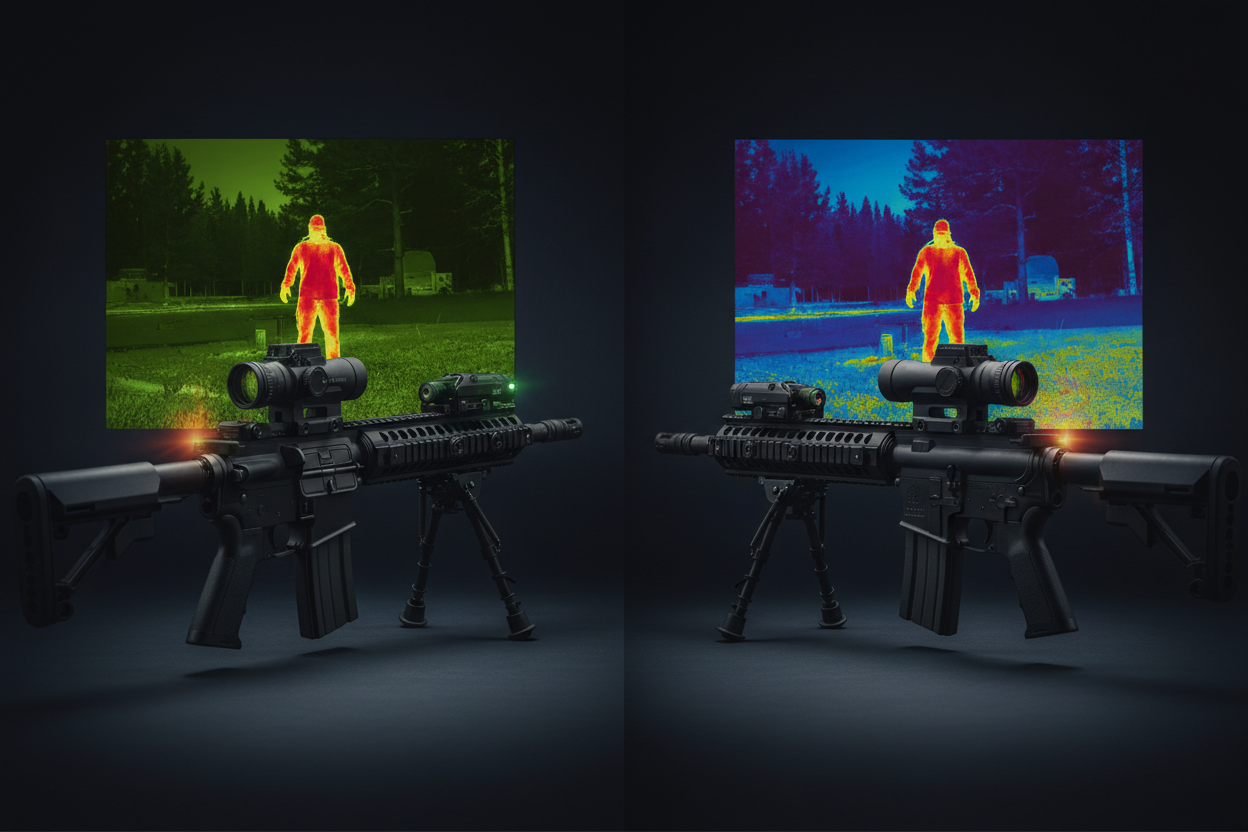
Thermal fusion attempts to combine these two types of information.
However, not every fusion system works the same way.
Buyers generally encounter two approaches:
-
Clip-on thermal overlay systems
-
Dedicated integrated fusion systems
A Clip-On Thermal Imager, commonly called a COTI, attaches to a compatible NVG and projects thermal information into the existing intensified image.
A dedicated fusion device is designed from the beginning to integrate image intensification and thermal sensing into one complete system.
Both approaches can improve detection and situational awareness, but they differ significantly in modularity, weight, cost, maintenance, image presentation and upgrade flexibility.
This guide compares COTI thermal overlay with dedicated fusion technology and explains why clip-on thermal imagers have become such an important upgrade for modern night vision users.
To understand the basic technology first, read Clip-On Thermal Imagers: Transforming Standard NVGs into Fusion Systems.
What Is Thermal Fusion Night Vision?
Thermal fusion night vision combines information from two sensor types:
-
An image intensifier tube
-
A thermal imaging sensor
The image intensifier provides environmental structure.
It helps the user interpret:
-
Terrain
-
Roads and trails
-
Buildings
-
Trees and vegetation
-
Obstacles
-
Shadows
-
Depth
-
Relative movement
The thermal sensor provides heat-based detection.
It can help identify:
-
People
-
Animals
-
Warm vehicles
-
Recently operated equipment
-
Heat sources in dark areas
-
Objects with strong temperature contrast
The goal of fusion is not simply to display more information.
The goal is to present complementary information in a way the user can interpret quickly.
For a broader explanation, read Thermal Fusion Night Vision: How Clip-On Thermal Imagers Enhance NVGs.
What Is a COTI Thermal Overlay?
A COTI is a compact thermal device attached to a compatible night vision optic.
Instead of replacing the original NVG image, it adds thermal cues to it.
Depending on the device and selected mode, the thermal information may appear as:
-
Heat outlines
-
Bright highlights
-
Edge-enhanced signatures
-
White-hot elements
-
Black-hot elements
-
Stronger thermal overlays
The user continues looking through the original night vision device.
The underlying intensified scene remains visible, while thermal information draws attention to warm objects.
This is why COTI is best described as an overlay system.
It upgrades an existing NVG rather than replacing it.
The currently listed ARGUS product for this type of upgrade is the JERRY-CE5.
What Is a Dedicated Fusion System?
A dedicated fusion system is designed to combine night vision and thermal imaging within one integrated platform.
Depending on the design, the system may include:
-
Built-in image intensifier channels
-
Integrated thermal sensors
-
Internal image-processing electronics
-
Dedicated fusion controls
-
Unified power management
-
Proprietary optics or displays
-
A housing designed specifically for both technologies
Rather than attaching a thermal module to an existing NVG, the user purchases a complete fusion device.
This can create a more integrated experience, but it also changes the ownership model.
The buyer is no longer upgrading a standard modular NVG.
The buyer is investing in a specialized platform that may depend on proprietary components, software, batteries, cables and service procedures.
COTI Overlay vs Dedicated Fusion: Quick Comparison
| Feature | COTI Thermal Overlay | Dedicated Fusion System |
|---|---|---|
| Starting platform | Existing compatible NVG | Purpose-built fusion device |
| Modularity | High | Usually lower |
| Removable thermal capability | Yes | Usually integrated permanently |
| Initial upgrade cost | Often lower if NVGs are already owned | Usually higher |
| Weight distribution | Adds weight to existing NVG | Designed around integrated components |
| Power management | Separate or additional power may be required | More unified, depending on design |
| Maintenance | NVG and COTI can often be serviced separately | May require specialized service |
| Upgrade flexibility | Strong | Depends on proprietary platform |
| Thermal image role | Detection-oriented overlay | More deeply integrated fusion image |
| Best for | Existing NVG users seeking modular thermal detection | Users who need a complete integrated fusion platform |
Neither approach is automatically better.
The correct choice depends on what the user already owns and what capability is actually required.
The Main COTI Advantage: Upgrade What You Already Own
The strongest argument for COTI is simple:
You do not have to replace a capable night vision system.
A user may already own:
-
PVS-14
-
PVS-31-style binoculars
-
BNVD-1431 MK2
-
BNVD-931
-
Another compatible binocular or monocular platform
If the NVG already provides good optical performance, reliable tubes and comfortable helmet-mounted use, replacing the entire system may not make sense.
A COTI allows the user to retain:
-
Existing image intensifier tubes
-
Familiar controls
-
Preferred lenses
-
Current helmet mount
-
Known diopter settings
-
Established training and operating habits
Thermal detection becomes an additional capability rather than a total platform change.
For a detailed installation-focused guide, read The Ultimate Night Vision Upgrade: Integrating JERRY-C5 COTI with Binocular NVGs.
Why Dedicated Fusion Can Feel More Integrated
Dedicated fusion systems are designed around both sensors from the beginning.
This may allow the manufacturer to optimize:
-
Sensor alignment
-
Thermal image placement
-
Internal cable routing
-
Control layout
-
Power distribution
-
Weight distribution
-
Display processing
-
Environmental sealing
The user may not need to attach an external thermal module or organize an additional cable.
The device can feel like one complete product rather than several connected components.
However, greater integration may reduce flexibility.
If the thermal module, power system or internal display develops a problem, the user may not be able to remove only the thermal portion and continue with a standard NVG configuration.
Service may also depend more heavily on the original manufacturer.
Detection Overlay vs Full Thermal Detail
COTI systems are generally strongest as detection aids.
The thermal overlay is intended to attract the user’s attention to heat signatures while preserving the original night vision image.
This is valuable when the user needs to:
-
Detect movement sooner
-
Notice a person in shadow
-
Find an animal in vegetation
-
Identify a warm vehicle
-
Scan visually complex terrain
-
Maintain awareness while moving
A dedicated fusion system may provide a more advanced or complete thermal presentation, depending on the sensor and display architecture.
It may offer greater control over:
-
Fusion intensity
-
Thermal dominance
-
Image blending
-
Detection palettes
-
Full thermal viewing modes
-
Digital processing
A user who needs maximum thermal detail may prefer dedicated fusion or a standalone high-resolution thermal monocular.
A user who mainly needs rapid heat alerts while retaining analog NVG navigation may prefer COTI.
Preserving Natural Night Vision Navigation
One of the most important advantages of COTI overlay is that the analog night vision image remains the foundation.
Image intensifier tubes offer:
-
Real-time viewing
-
Minimal perceptible latency
-
Natural motion
-
Useful depth cues
-
Familiar terrain detail
-
Strong helmet-mounted navigation
The COTI adds heat information without forcing the user to navigate using a thermal-only image.
This matters because thermal imaging can make some environmental features difficult to interpret.
For example:
-
Terrain with similar temperatures may appear flat
-
Holes and obstacles may not show natural visual depth
-
Glass can block or reflect thermal energy
-
Warm backgrounds can reduce target contrast
-
Recently heated surfaces may create visual clutter
COTI allows the user to rely on intensified imagery for movement while using thermal information primarily for detection.
When Dedicated Fusion Has the Advantage
Dedicated fusion may be the stronger choice when the user requires thermal integration as a central capability rather than an optional upgrade.
It may be preferable when:
-
Thermal fusion is required during nearly every operation
-
A single unified power system is important
-
External attachments are undesirable
-
A fully integrated display is preferred
-
The user needs deeper thermal control
-
Procurement favors one complete system
-
Training and maintenance can support the specialized platform
A professional organization may prefer dedicated fusion if it wants every user to receive the same standardized configuration.
An individual user may prefer COTI because it allows greater flexibility and lower commitment to a proprietary platform.
Modularity: The Strongest COTI Selling Point
A COTI can usually be removed when thermal detection is unnecessary.
That creates several configuration options:
Standard NVG Configuration
Use the original monocular or binocular without thermal overlay.
This provides the lowest practical weight and simplest setup.
NVG Plus COTI
Install the thermal module when detection capability is needed.
Standalone Thermal Support
Carry a separate thermal monocular for deliberate scanning while keeping the NVG unchanged.
Mission-Specific Configuration
Choose the equipment based on terrain, weather, temperature contrast and expected viewing duration.
This flexibility is difficult to achieve with a dedicated fusion platform because the thermal hardware is normally built into the device.
Modularity is especially valuable for users who do not need thermal capability every night.
Compatibility Is the Main COTI Challenge
A COTI is only useful if it integrates correctly with the host NVG.
Compatibility depends on more than the device looking similar to another supported platform.
Users should verify:
-
Objective lens diameter
-
Mounting interface
-
Optical geometry
-
Clearance around the pod
-
Pod articulation
-
Cable direction
-
Control access
-
Helmet mount clearance
-
Lens protector interference
-
Manufacturer recommendations
ARGUS lists the BNVD-931 Housing Kit as compatible with clip-on thermal imagers such as E-COTI and Jerry-C.
ARGUS BNVD-1431 MK2 configurations also describe compatibility with E-COTI and Jerry-C thermal overlay devices.
Compatibility should still be confirmed for the exact housing, lens and COTI version being purchased.
COTI Integration with Binocular NVGs
Binocular NVGs are popular hosts for COTI because they already provide both eyes with intensified imagery.
Potential advantages include:
-
Better depth perception than monocular use
-
More natural movement
-
Greater long-duration comfort
-
Stronger situational awareness
-
Continued use of one clean optical channel
-
Thermal overlay introduced through the selected side
The COTI is normally attached to one pod rather than both.
The user can choose the left or right side based on:
-
Eye dominance
-
Cable routing
-
Control placement
-
Pod articulation
-
Visual preference
For compatible systems and complete night vision platforms, browse the Night Vision collection.
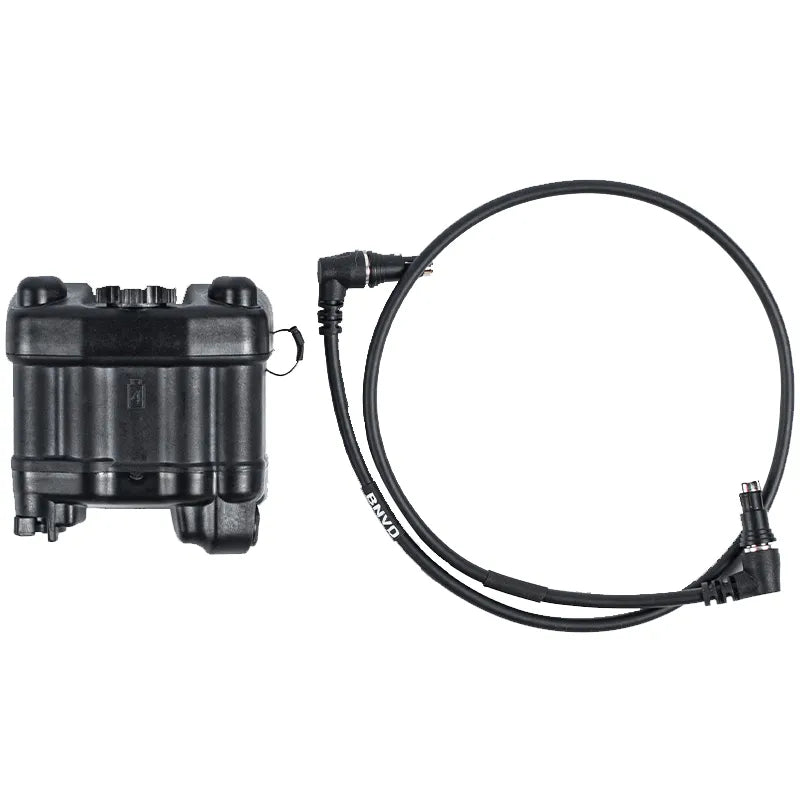
Power Management: Integrated vs Add-On
Power is one area where dedicated fusion may have an operational advantage.
A dedicated platform may use one coordinated battery system for its image-intensification and thermal functions.
A COTI setup may require the user to manage:
-
NVG battery
-
COTI battery
-
External battery pack
-
Power cable
-
Backup batteries
-
Cold-weather runtime
This is not necessarily a major problem, but it creates more components to monitor.
Before using a COTI system, users should confirm:
-
The exact battery type
-
Expected runtime
-
External power compatibility
-
Cable compatibility
-
Battery replacement procedure
-
Low-power indicators
-
Cold-temperature performance
Power planning should be tested before the system is used for an extended night session.
Weight and Helmet Balance
A COTI adds weight to the front of an existing helmet setup.
The weight may feel more significant because the device sits forward of the helmet’s center.
Potential effects include:
-
Increased neck fatigue
-
Greater forward helmet pull
-
More pressure from the retention system
-
Reduced comfort during long sessions
-
Additional movement when running or climbing
A dedicated fusion system may distribute its components more evenly because the housing was designed around them.
However, dedicated fusion devices can still be heavy.
The correct comparison is not simply COTI weight versus dedicated fusion weight.
The buyer should compare the total operational configuration:
-
NVG
-
COTI or integrated thermal components
-
Mount
-
Battery pack
-
Counterweight
-
Cables
-
Lens protection
-
Helmet accessories
A rear battery pack can provide functional counterbalance. Relevant options can be found in the Night Vision Accessories collection.
Image Clutter and the Learning Curve
Thermal overlay provides more information, but more information is not always easier to use.
If the thermal intensity is too high, the image may become distracting.
Users may experience:
-
Excessive highlighting
-
Reduced terrain visibility
-
Attention drawn to irrelevant heat sources
-
Visual fatigue
-
Difficulty interpreting warm backgrounds
-
Confusion in vehicles or buildings
Dedicated fusion systems can have the same problem if the fusion level is configured poorly.
Effective fusion use requires learning when to use:
-
Outline mode
-
Subtle highlighting
-
Strong thermal overlay
-
Full thermal mode
-
Reduced sensitivity
The best setting depends on the environment.
In cold terrain, people and animals may stand out clearly.
In hot weather, roads, walls, vehicles and rocks may retain heat, creating a more complex thermal scene.
Training matters more than the equipment label.
Maintenance and Repair
A modular COTI setup can offer an important maintenance advantage.
The NVG and thermal module are separate devices.
If the COTI needs service, the user may still be able to operate the original NVG.
If the NVG needs service, the thermal unit remains a separate asset.
Dedicated fusion systems may require specialized repair because multiple technologies are integrated into one housing.
Possible considerations include:
-
Proprietary internal electronics
-
Specialized displays
-
Sensor alignment
-
Software or firmware dependence
-
Manufacturer-specific batteries
-
Limited third-party parts availability
COTI does not eliminate maintenance complexity, but it separates the thermal upgrade from the primary night vision platform.
Cost: Compare the Complete System
A COTI is not inexpensive.
However, the correct cost comparison depends on what the buyer already owns.
COTI Makes Financial Sense When:
-
A capable NVG is already owned
-
The current tubes and optics are satisfactory
-
Thermal capability is needed only for some uses
-
The user wants to avoid replacing the entire platform
-
Modularity has long-term value
Dedicated Fusion May Make Financial Sense When:
-
The buyer is starting without an existing NVG
-
Fusion is a core requirement
-
A complete standardized platform is preferred
-
Integrated power and controls reduce operational complexity
-
The organization can support proprietary maintenance
Do not compare only the price of a COTI with the price of a dedicated fusion device.
Compare the total cost of:
-
Host NVG
-
Image intensifier tubes
-
Thermal module
-
Mount
-
Battery system
-
Accessories
-
Maintenance
-
Training
-
Future upgrades
COTI vs Standalone Thermal
A standalone thermal monocular should also be part of the comparison.
Standalone thermal may be better when:
-
Thermal detail is the primary requirement
-
Long-range scanning is important
-
The user operates from a stationary position
-
Multiple people need to share the thermal device
-
Helmet integration is unnecessary
-
Recording or digital thermal functions are important
COTI may be better when:
-
Hands-free detection is required
-
The user is moving under NVGs
-
Switching devices would be inefficient
-
Thermal alerts are more important than full thermal detail
-
Existing binocular NVGs are already part of the setup
For a standalone thermal perspective, read Thermal Navigation in Harsh Environments: A Deep Dive into PFalcon V2 Specifications.
Which System Is Better for Long-Duration Use?
Long-duration comfort depends on the complete setup.
COTI may create more front weight and cable management, but it allows the user to remove thermal capability when it is not needed.
Dedicated fusion may provide cleaner integration, but its weight and electronics remain part of the device during every use.
Before choosing, compare:
-
Total helmet weight
-
Front-to-rear balance
-
Battery runtime
-
Cable complexity
-
Display comfort
-
Overlay brightness
-
Heat generated by electronics
-
Eye fatigue
-
Ease of switching modes
Users should test the system for realistic periods rather than judging it after a few minutes.
Who Should Choose COTI Overlay?
COTI is generally the better choice for users who:
-
Already own compatible, high-quality NVGs
-
Want a modular thermal upgrade
-
Need faster heat detection while moving
-
Want to retain analog navigation
-
Prefer removable thermal capability
-
Want to service the NVG and thermal module separately
-
Use different configurations for different environments
-
Are prepared to manage additional power and weight
For an ARGUS-listed clip-on thermal option, view the JERRY-CE5.
Who Should Choose Dedicated Fusion?
Dedicated fusion may be the better choice for users who:
-
Need thermal fusion during nearly every use
-
Want one unified device
-
Prefer integrated controls and internal routing
-
Need a standardized professional platform
-
Have access to manufacturer-specific service
-
Accept a higher initial investment
-
Prioritize integration over modularity
Dedicated fusion is not automatically more capable in every environment.
The actual value depends on sensor quality, tube quality, image processing, weight, ergonomics and system reliability.
Common Buyer Mistakes
Mistake 1: Assuming Fusion Replaces Good Image Intensifier Tubes
Thermal overlay cannot fix a noisy, poorly focused or weak NVG image.
Compare available tubes through the Image Intensifier Tube collection.
Mistake 2: Expecting COTI to Match Every Standalone Thermal Device
COTI is primarily an integrated detection aid.
Mistake 3: Ignoring Compatibility
Objective lens size and housing geometry must be confirmed.
Mistake 4: Forgetting Total Helmet Weight
The complete system must be evaluated, not just the COTI itself.
Mistake 5: Using Maximum Overlay All the Time
Excessive thermal information can hide useful environmental detail.
Mistake 6: Ignoring Battery and Cable Management
A fusion system is only useful when it remains powered and physically secure.
Mistake 7: Buying Dedicated Fusion Only Because It Sounds More Advanced
Integration has value, but modularity may provide better long-term flexibility.
Final Verdict
COTI thermal overlay and dedicated fusion systems both combine heat detection with image-intensified night vision.
They simply take different paths.
Dedicated fusion offers deeper hardware integration. It can provide unified controls, cleaner internal routing and a purpose-built fusion experience.
COTI offers modularity.
It allows users to add thermal detection to compatible NVGs without abandoning the night vision platform they already know and trust.
For users who already own high-quality binocular or monocular NVGs, COTI can be one of the most practical thermal upgrades available.
It preserves the strengths of analog night vision:
-
Natural movement
-
Terrain detail
-
Depth perception
-
Minimal visual delay
It adds the strengths of thermal detection:
-
Faster heat-signature recognition
-
Better detection in visual clutter
-
Improved awareness in total darkness
-
Reduced dependence on visible contrast
The real decision is not whether overlay or dedicated fusion is universally better.
The decision is whether you need modular thermal assistance or a fully integrated fusion platform.
Choose COTI when flexibility, removability and compatibility with an existing NVG matter most.
Choose dedicated fusion when thermal integration is a permanent operational requirement and a unified system justifies the additional cost and service dependence.
The best fusion system is the one that gives useful thermal information without compromising navigation, comfort, reliability or the clarity of the original night vision image.