
Cart
0
Introduction
Standard night vision goggles are powerful tools for seeing in low-light environments.
They amplify available light, reveal terrain, improve movement, and allow users to operate in darkness with far greater confidence than the naked eye.
But traditional image intensifier night vision has one major limitation:
It cannot detect heat.
That means standard NVGs may struggle to quickly identify hidden people, animals, recently used vehicles, or warm objects in complex environments.
This is where Clip-On Thermal Imagers, commonly known as COTI, change the game.
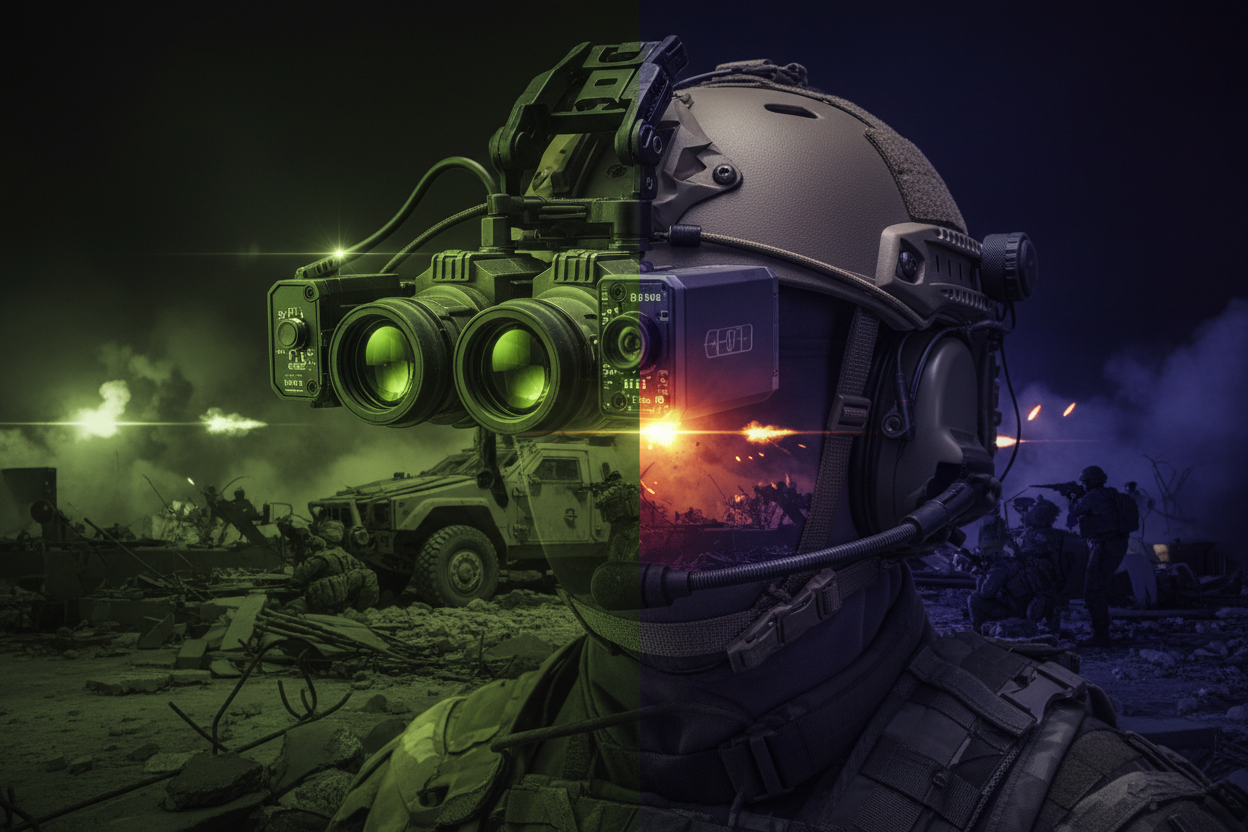
A COTI device can add thermal detection capability to existing night vision goggles, creating a fusion-style system that combines image intensification with thermal overlay.
Instead of replacing your NVGs, COTI enhances them.
In this guide, we explain what Clip-On Thermal Imagers are, how COTI works, why thermal fusion matters, and how standard NVGs can be upgraded into more capable detection systems.
For a broader overview of the technology, you can also read Thermal Fusion Night Vision: How COTI Enhances NVGs.
What Is a Clip-On Thermal Imager?
A Clip-On Thermal Imager, or COTI, is a compact thermal device designed to attach to a night vision system.
Instead of functioning as a standalone thermal scope, a COTI projects thermal information into the user’s night vision view.
This creates a combined image where the user can see:
-
The intensified night vision scene
-
Thermal highlights from heat-emitting objects
In simple terms:
Your NVG shows the environment.
The COTI highlights heat.
Together, they create a fusion-style night vision system.
This is especially useful for detecting people, animals, vehicles, and other warm objects that may be difficult to identify through image intensification alone.
How Standard NVGs Work
To understand why COTI matters, it helps to understand the strengths and limits of standard NVGs.
Traditional night vision devices use image intensifier tubes.
These tubes collect available light from sources such as:
-
Moonlight
-
Starlight
-
Sky glow
-
Reflected ambient light
-
Artificial light sources
The tube amplifies that light and produces a visible image.
This allows users to see details such as:
-
Terrain
-
Trees
-
Roads
-
Buildings
-
Obstacles
-
Movement
-
Shadows
-
Structural outlines
Standard NVGs are excellent for navigation and scene recognition.
However, they do not detect thermal energy.
For more information about how image intensifier tubes work, read What Is an Image Intensifier Tube?.
The Main Limitation of Standard NVGs
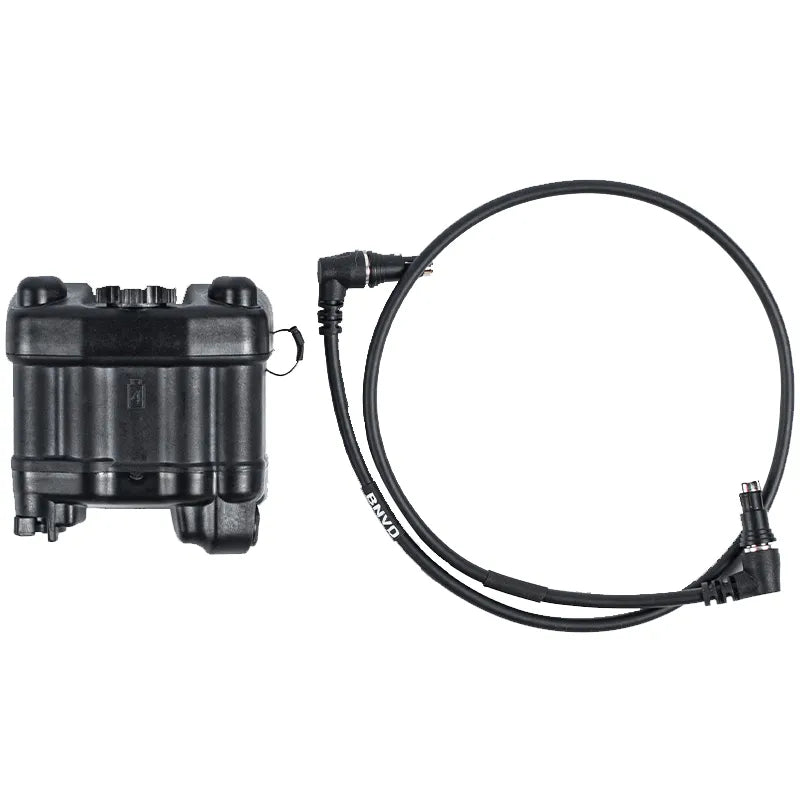
Image intensifier night vision depends on available light.
Even with high-performance tubes, standard NVGs may struggle in situations where:
-
There is very little ambient light
-
The target blends into the background
-
A person is partially hidden by foliage
-
Animals are standing still
-
Camouflage reduces visual contrast
-
Shadows obscure movement
-
Terrain and vegetation create visual clutter
A person wearing dark clothing in front of a dark background may be difficult to detect with standard NVGs.
An animal standing still in brush may not immediately stand out.
A recently used vehicle may look like any other object in the scene.
This is not a failure of night vision.
It is simply the limitation of image intensification.
Night vision sees light.
Thermal sees heat.
A COTI helps bridge that gap.
How COTI Adds Thermal Fusion
A COTI device uses a thermal sensor to detect infrared radiation emitted by warm objects.
It then projects that thermal information into the night vision image.
The user sees a thermal overlay on top of the intensified night vision scene.
Depending on the device and mode, thermal information may appear as:
-
Outlines
-
Highlights
-
White-hot elements
-
Black-hot elements
-
Edge detection
-
Heat signatures
-
Overlay patterns
The result is not the same as simply looking through a standalone thermal optic.
Instead, COTI enhances the NVG view by adding heat-based detection cues.
This helps the user notice things that may otherwise blend into the background.
Night Vision vs Thermal vs COTI Fusion
Standard NVGs and thermal imagers solve different problems.
Standard Night Vision
Standard night vision is best for:
-
Navigation
-
Depth perception
-
Terrain recognition
-
Moving through the environment
-
Reading shapes and structure
-
Maintaining natural scene awareness
But it may struggle with hidden or low-contrast heat sources.
Thermal Imaging
Thermal imaging is best for:
-
Detecting people
-
Detecting animals
-
Seeing warm objects
-
Identifying heat contrast
-
Working in total darkness
-
Spotting targets through light cover
But thermal does not usually provide the same natural scene detail as NVGs.
COTI Thermal Fusion
COTI combines both advantages:
-
NVG provides environmental detail
-
Thermal overlay highlights heat signatures
This makes COTI especially useful when detection speed matters.
For users comparing technologies, a fusion setup can offer a major advantage over using night vision or thermal alone.
Why COTI Is So Valuable
The main value of COTI is faster detection.
Standard NVGs may show a complete scene, but the user still has to visually search for threats, animals, or movement.
A thermal overlay helps important heat sources stand out.
This can reduce the time it takes to notice:
-
A person in shadow
-
An animal in brush
-
A warm vehicle engine
-
A recently used object
-
A heat source behind visual clutter
-
Movement in a dark environment
In many situations, the difference is not simply image quality.
It is information speed.
COTI helps the user process the environment faster.
COTI and PVS-14 Systems
The PVS-14 is one of the most common monocular night vision platforms.
Because it is widely used and highly modular, many users are interested in adding COTI to a PVS-14 setup.
A PVS-14 with COTI can provide:
-
Standard monocular night vision
-
Thermal overlay capability
-
Improved detection
-
Better performance in complex environments
-
More flexibility than a basic monocular alone
This can be useful for users who want to upgrade an existing system without moving immediately to a full dual-tube or dedicated fusion device.
For more PVS platform guidance, read PVS-14 vs PVS-31: Which Night Vision Device Is Right for You?.
COTI and Binocular Night Vision
COTI is also commonly discussed with binocular night vision systems.
Modern binocular systems may include:
-
PVS-31 style goggles
-
BNVD systems
-
BNVD-1431 style housings
-
Other dual-tube NVG platforms
Adding COTI to a binocular setup can provide a powerful combination:
-
Better depth perception from dual tubes
-
More natural movement
-
Thermal overlay for faster detection
-
Improved situational awareness
-
Stronger performance in mixed environments
For users already investing in binocular NVGs, COTI can be one of the most meaningful upgrades.
If you are comparing binocular systems, read BNVD-1431 MK2 vs Traditional NVGs: A Comprehensive Review.
Real-World Benefits of COTI
1. Faster Target Detection
COTI helps heat signatures stand out from the background.
This can make it easier to detect a person, animal, or warm object before the user would notice it through standard night vision alone.
2. Better Performance in Visual Clutter
Brush, shadows, uneven terrain, and dark backgrounds can make detection difficult.
Thermal overlay helps reduce the problem by identifying heat contrast.
3. Stronger Situational Awareness
Fusion-style viewing gives the user more information in a single image.
Instead of switching between night vision and thermal devices, the user can see both layers together.
4. Better Use in Total Darkness
Standard NVGs need some available light or IR illumination.
Thermal detection does not depend on visible light.
A COTI can help identify heat signatures even when the night vision image is limited.
5. Improved Search Capability
For search and rescue, wildlife observation, security, or perimeter scanning, thermal overlay can help users locate heat sources faster.
This is one of the most practical advantages of COTI.
COTI in Tactical Environments
In tactical use, speed and awareness matter.
COTI can help users identify:
-
Human movement
-
Hidden positions
-
Warm equipment
-
Vehicle heat
-
Recently occupied areas
-
Potential threats in shadows
This can be especially valuable in:
-
Urban operations
-
Woodland movement
-
Perimeter security
-
Team-based movement
-
Building approaches
-
Vehicle areas
-
Mixed lighting environments
Standard NVGs help users move.
COTI helps users detect.
Together, they create a more complete system.
COTI for Search and Rescue
COTI can also be valuable for search and rescue operations.
A missing person may be hard to see with standard night vision if they are:
-
Lying still
-
Partially hidden
-
In vegetation
-
Wearing dark clothing
-
Located in uneven terrain
-
Outside the main light path
Thermal overlay can help reveal body heat and guide searchers toward areas that deserve closer attention.
COTI does not replace proper search methods, but it can improve detection efficiency in low-light environments.
COTI for Hunting and Wildlife Observation
For hunting and wildlife observation, COTI can help locate animals faster.
Animals may blend into brush, shadows, or terrain when viewed through standard NVGs.
Thermal overlay helps identify heat signatures, making it easier to detect presence and movement.
However, users should always follow local laws and regulations regarding night vision and thermal equipment use.
Rules vary by location and activity.
COTI vs Standalone Thermal
Some users ask whether they should buy COTI or a standalone thermal device.
The answer depends on the use case.
Choose COTI If:
-
You already use helmet-mounted NVGs
-
You want thermal overlay while moving
-
You want a fusion-style view
-
You need hands-free detection support
-
You want to enhance an existing NVG setup
Choose Standalone Thermal If:
-
You mainly scan from a static position
-
You want dedicated thermal image quality
-
You do not need NVG integration
-
You prefer handheld or weapon-mounted thermal use
-
You want thermal-only detection
COTI is not always a replacement for standalone thermal.
It is best understood as an upgrade to helmet-mounted night vision.
COTI vs Built-In Fusion Systems
Dedicated fusion night vision systems may integrate image intensification and thermal imaging into one device.
These systems can be highly capable, but they are often expensive and less modular.
COTI offers another path.
Instead of replacing the entire NVG system, users can add thermal overlay to compatible existing goggles.
This makes COTI attractive for users who already own:
-
PVS-14
-
PVS-31 style goggles
-
BNVD systems
-
Other compatible NVG platforms
COTI can be a more modular way to move toward fusion capability.
Key Features to Consider When Choosing a COTI
Before choosing a Clip-On Thermal Imager, consider these factors.
1. Compatibility
Confirm whether the COTI works with your NVG platform.
Check compatibility with:
-
PVS-14
-
PVS-31
-
BNVD systems
-
Objective lens size
-
Mounting interface
-
Helmet setup
-
Optical alignment
Compatibility is the first thing to verify.
2. Overlay Modes
Different COTI devices may offer different thermal display modes.
Useful modes may include:
-
Outline mode
-
Patrol mode
-
White-hot
-
Black-hot
-
Full thermal overlay
-
Edge enhancement
The best mode depends on the environment and user preference.
3. Weight
A COTI adds weight to the front of the NVG system.
This can affect helmet balance.
Users may need a rear battery pack, counterweight, or improved helmet setup.
For more information, read Managing NVG Weight for Helmet Balance.
4. Power Management
COTI devices require power.
Consider:
-
Battery type
-
Runtime
-
External power options
-
Cable routing
-
Cold weather performance
-
Backup batteries
Power planning becomes more important when adding thermal accessories.
5. Image Alignment
A good COTI setup should align properly with the NVG image.
Poor alignment can make the overlay distracting or less useful.
Installation and adjustment matter.
6. Environmental Performance
Thermal performance can be affected by:
-
Rain
-
Fog
-
Humidity
-
Heat saturation
-
Temperature similarity between objects
-
Glass and reflective surfaces
COTI is powerful, but users should understand its limits.
Limitations of COTI
COTI is a major upgrade, but it is not perfect.
1. Added Weight
Even compact thermal imagers add front-end weight to the NVG setup.
This may require better helmet balance.
2. Added Complexity
Users must manage:
-
Extra device controls
-
Batteries
-
Alignment
-
Modes
-
Mounting
-
Environmental limitations
3. Learning Curve
Thermal overlay adds more visual information.
New users may need time to understand what they are seeing.
Too much overlay can become distracting if not configured correctly.
4. Cost
COTI devices are not entry-level accessories.
They are usually purchased by users who already understand the value of helmet-mounted night vision.
5. Not a Replacement for Good NVGs
COTI enhances night vision, but it does not replace the need for a good image intensifier tube.
A weak NVG image with thermal overlay is still limited.
The best results come from combining strong NVGs with a well-configured COTI.
Best Users for COTI
COTI is especially useful for:
-
Tactical users
-
Law enforcement teams
-
Search and rescue teams
-
Security professionals
-
Advanced night vision users
-
Hunters where legal
-
Wildlife observers
-
Users with existing PVS-14 or BNVD setups
-
Anyone needing faster heat-based detection
Casual users may not need COTI immediately.
But for serious helmet-mounted night vision users, it can be one of the most powerful upgrades available.
How to Build a Better Fusion Setup
A strong COTI-based fusion setup should include:
-
A quality NVG platform
-
A clean image intensifier tube
-
Compatible COTI mount
-
Proper helmet balance
-
Stable NVG mount
-
Reliable battery plan
-
Cable management
-
Lens protection
-
User training and practice
The COTI is only one part of the system.
For best results, the entire setup must work together.
If you are building a helmet-mounted system, you may also find these guides useful:
Common Mistakes When Using COTI
Mistake 1: Expecting It to Replace Thermal
COTI enhances NVGs with thermal overlay, but a dedicated thermal device may still be better for long-range scanning or thermal-only observation.
Mistake 2: Ignoring Helmet Balance
Adding COTI changes the weight of the front optical system.
Balance matters.
Mistake 3: Using Too Much Overlay
More thermal information is not always better.
In some environments, subtle outline or highlight modes may be easier to interpret.
Mistake 4: Forgetting Battery Planning
A dead COTI gives no thermal advantage.
Carry power according to your use case.
Mistake 5: Skipping Practice
Fusion viewing takes time to learn.
Users should practice in different environments before relying on COTI in serious use.
Final Thoughts
Clip-On Thermal Imagers are one of the most effective ways to transform standard NVGs into fusion-capable systems.
By adding thermal overlay to image intensifier night vision, COTI gives users a more complete view of the environment.
Standard NVGs provide structure, depth, movement, and navigation.
COTI adds heat detection.
Together, they improve detection speed, situational awareness, and overall capability in complex low-light environments.
For users running PVS-14, PVS-31 style goggles, BNVD systems, or other compatible NVG platforms, COTI can be a powerful upgrade path toward thermal fusion night vision.
If your goal is to detect more, react faster, and get more information from your night vision setup, Clip-On Thermal Imagers deserve serious consideration.