
Cart
0
Introduction
Night vision devices are precision optical systems.
A complete NVG setup may include:
-
Image intensifier tube
-
Objective lens
-
Eyepiece lens
-
Housing
-
Battery compartment
-
Sealing components
-
Purge valve
-
O-rings
-
Retaining rings
-
Mounting accessories
Most users focus on tube performance first.
They compare FOM, SNR, resolution, EBI, halo, white phosphor, green phosphor, auto-gating, and tube grade.
But long-term night vision reliability also depends on something less visible:
internal environmental control.
Moisture, fogging, dust, and internal contamination can reduce image clarity and damage the user experience.
That is why NVG nitrogen purging matters.
In this guide, we explain what nitrogen purging is, why night vision devices are purged, how purge valve fittings support maintenance, and why a small component like a Purge Valve Fitting can be important for keeping NVGs clear, dry, and field-ready.
What Is NVG Nitrogen Purging?
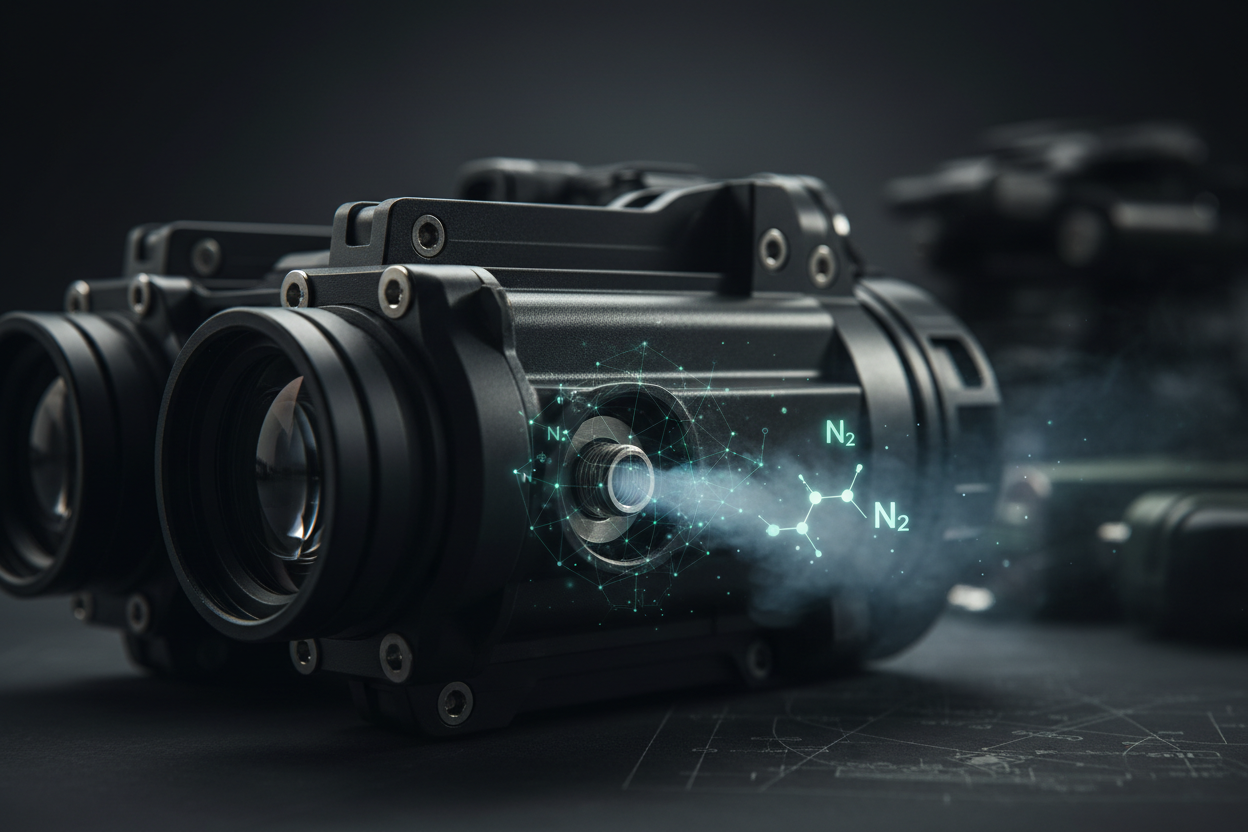
NVG nitrogen purging is the process of removing air and moisture from inside a night vision device and replacing it with dry nitrogen.
The goal is to reduce internal humidity and help prevent internal fogging.
Night vision devices may be exposed to:
-
Rain
-
Humidity
-
Temperature changes
-
Cold weather
-
Warm indoor air
-
Outdoor condensation
-
Dusty environments
-
Long-term storage conditions
If moisture is trapped inside the housing, it can condense when the temperature changes.
This can create fog or haze inside the optical system.
Nitrogen purging helps reduce that risk by replacing moisture-containing air with dry gas.
Why Internal Moisture Is a Problem
External lens fogging is inconvenient.
Internal fogging is more serious.
External fog can usually be wiped away carefully.
Internal fog cannot be wiped off without opening the device.
Internal moisture can cause:
-
Fogging inside the optical path
-
Reduced image clarity
-
Lower contrast
-
Hazy viewing
-
User discomfort
-
Potential corrosion risk
-
Long-term component degradation
-
Reduced reliability in the field
For night vision devices, clarity matters.
A high-quality image intensifier tube cannot deliver its full benefit if the optical path is affected by internal condensation.
That is why moisture prevention is a key part of NVG maintenance.
What Causes NVG Fogging?
NVG fogging usually happens when moisture meets temperature change.
Common causes include:
-
Moving from warm indoor air to cold outdoor air
-
Moving from cold outdoors into a warm vehicle
-
Rain exposure
-
Humid environments
-
Poor housing sealing
-
Aging O-rings
-
Damaged purge valve
-
Improper assembly
-
Recent repair without repurging
-
Long-term storage in humid conditions
If the device is properly sealed and purged, it is less likely to fog internally.
If the seal is weak or the purge process was not done correctly, fogging becomes more likely.
External Fogging vs Internal Fogging
It is important to separate external fogging from internal fogging.
External Fogging
External fogging appears on the outside of the lenses.
It may happen because of:
-
Breath
-
Cold air
-
Rain
-
Humidity
-
Temperature change
External fog can usually be managed with careful lens cleaning, lens covers, anti-fog practices, and proper storage.
For lens protection, read How to Protect Your NVG Lenses: Sacrificial Lenses vs. Universal Protection Covers.
Internal Fogging
Internal fogging appears inside the device.
It may indicate moisture inside the housing or a sealing problem.
Internal fogging is more serious because the user cannot simply wipe it away.
If internal fogging appears, the device may need inspection, seal replacement, and nitrogen purging.
Why Nitrogen Is Used
Nitrogen is commonly used for optical purging because it is dry and stable.
The purpose is not to make the device more powerful.
It does not increase FOM.
It does not improve SNR.
It does not change tube resolution.
Instead, nitrogen purging helps protect the internal optical environment.
It helps reduce:
-
Internal moisture
-
Condensation risk
-
Fogging
-
Haze caused by trapped humidity
In simple terms:
Nitrogen purging helps the device stay clear and reliable when conditions change.
What Is a Purge Valve Fitting?
A purge valve fitting is a small component used in the purging and maintenance process.
It helps provide a connection point for purge equipment so air and moisture can be removed and replaced with dry gas.
In night vision maintenance, a purge valve fitting can support:
-
Nitrogen purging
-
Moisture removal
-
Internal pressure management during service
-
Device maintenance workflows
-
Housing inspection and resealing
-
Post-repair repurging
The Purge Valve Fitting is listed as a spare part, making it relevant for users who maintain, repair, assemble, or service night vision devices.
It is not a flashy accessory.
But for maintenance work, small fittings like this can be important.
Why a Purge Valve Fitting Matters
A purge valve fitting matters because purging requires a controlled connection.
Without proper purge access, it becomes harder to safely remove internal moisture and refill the device with dry nitrogen.
A proper fitting helps with:
-
Cleaner maintenance procedure
-
More controlled purging
-
Reduced risk of improper sealing
-
Better support for professional servicing
-
More reliable post-assembly maintenance
For builders, technicians, and advanced users, having the right spare parts and maintenance fittings can reduce downtime and improve service quality.
You can browse related maintenance components through the Spare Parts collection.
When Does an NVG Need Nitrogen Purging?
A night vision device may need purging in several situations.
1. After Assembly
When a device is newly assembled, it should be properly sealed and purged.
This helps remove internal moisture before field use.
2. After Repair
If the housing has been opened, repaired, or serviced, the internal environment has been exposed to air.
Repurging is usually recommended after reassembly.
3. After Lens Replacement
Replacing objective lenses, eyepieces, retaining rings, or sealing components may affect the sealed environment.
After optical work, the device may require purging.
For lens-related upgrades, visit the Optics collection.
4. After O-Ring or Seal Replacement
O-rings and seals help keep the housing protected.
If they are replaced or disturbed, purging may be part of the maintenance process.
5. If Internal Fogging Appears
If the inside of the device fogs, nitrogen purging and seal inspection may be needed.
6. After Long-Term Storage in Humid Conditions
If a device has been stored in humid environments, inspection and maintenance may be helpful before serious use.
Nitrogen Purging and Waterproofing Are Not the Same
Many users confuse purging with waterproofing.
They are related, but they are not the same.
Waterproofing
Waterproofing depends on physical sealing.
This includes:
-
Housing design
-
O-rings
-
Gaskets
-
Lens seals
-
Battery cap seals
-
Thread quality
-
Purge valve sealing
Nitrogen Purging
Nitrogen purging manages the internal air environment.
It removes moisture and replaces air with dry gas.
A device can be purged but still leak if seals are bad.
A device can have good seals but still contain moisture if it was assembled or serviced without proper purging.
For the best result, both sealing and purging matter.
NVG Purging and Image Clarity
Nitrogen purging does not directly improve the image intensifier tube specifications.
It will not turn a low-SNR tube into a high-SNR tube.
However, it can help preserve image clarity by preventing internal haze and fogging.
A device with internal moisture may appear:
-
Hazy
-
Softer
-
Lower contrast
-
Less comfortable
-
Less reliable in changing temperatures
This can make the system feel worse even if the tube itself is good.
For tube performance basics, read What Is FOM in Night Vision? Understanding Image Intensifier Tube Specs.
Purging and Temperature Changes
Temperature change is one of the biggest reasons purging matters.
A device may work fine in one environment but fog when moved into another.
Examples include:
-
Warm room to cold night
-
Cold field to warm vehicle
-
Humid air to air-conditioned space
-
Rainy outdoor use followed by storage
-
Desert heat to cold night conditions
If moisture is trapped inside the device, temperature changes can cause condensation.
Nitrogen purging reduces the moisture available to condense.
This helps the device remain clearer across environmental transitions.
Purging After Night Vision Tube Installation
Image intensifier tube installation often requires opening the housing.
Once the housing is opened, internal air can enter.
That air may contain moisture.
After the tube is installed and the device is sealed, purging helps restore a dry internal environment.
This is especially relevant for users working with:
-
MX10160 tubes
-
MX11769 tubes
-
2-pin tubes
-
3-pin tubes
-
Flying wire tubes
-
Gen 2+ tubes
-
Gen 3 tubes
-
White phosphor tubes
If you are comparing tube formats, read The Truth About Flying Wires vs 3-Pin Tubes: Managing Manual Gain Control.
You can also compare tube options through the Image Intensifier Tube collection.
Purging After Lens Work
Lens work may also require repurging.
This includes:
-
Objective lens replacement
-
Eyepiece lens replacement
-
Retaining ring replacement
-
O-ring replacement
-
Optical cleaning inside the housing
-
Housing resealing
Any time the sealed optical chamber is opened, moisture can enter.
After the work is complete, purging helps reduce internal humidity.
For optical components and related parts, visit the Optics collection and Spare Parts collection.
Purging and Long-Term Storage
Nitrogen purging also supports long-term storage reliability.
A device stored in humid conditions may be exposed to moisture over time, especially if seals are aging or compromised.
Good storage habits include:
-
Keeping devices in a dry case
-
Avoiding wet storage
-
Using lens covers
-
Inspecting seals
-
Keeping battery compartments clean
-
Removing batteries when appropriate
-
Avoiding sudden temperature shock
-
Having the device inspected if internal fog appears
A purge valve fitting is part of the maintenance ecosystem that helps service the device when purging is needed.
Signs Your NVG May Need Purging
Your night vision device may need inspection or purging if you notice:
-
Fogging inside the lenses
-
Haze that cannot be wiped away externally
-
Condensation after temperature change
-
Moisture marks inside the optical path
-
Image clarity that changes with weather
-
Fogging after recent repair
-
Fogging after lens replacement
-
Visible seal damage
-
Battery compartment moisture
-
Unusual internal haze during use
If the issue is external, cleaning and lens protection may help.
If the issue is internal, professional inspection may be required.
Can You Purge NVGs at Home?
Some advanced users and builders may have access to purge equipment and may perform maintenance themselves.
However, nitrogen purging should be done carefully.
Improper purging or sealing can create problems.
Potential risks include:
-
Incomplete moisture removal
-
Poor seal confirmation
-
Damage to threads or fittings
-
Contamination during service
-
False confidence in a leaking device
-
Incorrect pressure handling
-
Moisture remaining inside the housing
For most casual users, professional servicing is the safer choice.
A Purge Valve Fitting is useful for maintenance and service workflows, but it should be used with proper equipment and knowledge.
Purge Valve Fitting vs Other Spare Parts
A purge valve fitting is only one part of the maintenance system.
Other spare parts may also support durability and reliability, such as:
-
O-rings
-
Battery caps
-
Retaining rings
-
Objective lens components
-
Eyepiece components
-
Protective lens covers
-
Plug covers
-
Assembly tools
-
Storage cases
For example, the Spare Parts collection includes maintenance-related parts such as purge valve fitting, lens-related rings, plug covers, battery cap assemblies, sacrificial lenses, and hard cases.
If you are maintaining night vision devices, it is worth building a small support kit.
Purging and Professional Assembly
Professional night vision assembly is not only about installing a tube.
A proper build may include:
-
Tube inspection
-
Lens inspection
-
Housing inspection
-
Seal check
-
Diopter adjustment
-
Optical alignment
-
Collimation
-
Gain matching
-
Nitrogen purging
-
Final quality check
This is especially important for binocular and panoramic systems, where small issues can affect viewing comfort.
For testing and assembly support, see NIGHT VISION DEVICE ASSEMBLY TOOLS SETS and Diopter tube test device.
Purging for Monocular NVGs
Monocular devices such as PVS-14 style systems still benefit from proper purging.
A monocular has one optical channel, but moisture can still affect the internal view.
Purging is especially relevant after:
-
Tube installation
-
Lens replacement
-
Housing repair
-
Seal replacement
-
Battery compartment service
-
Long-term humid storage
For users comparing PVS-style systems, read PVS-14 vs PVS-31: Which Night Vision Device Is Right for You?.
Purging for Binocular NVGs
Binocular systems have two optical channels.
That means there are more sealed areas and more optical surfaces to maintain.
Internal fogging on one side can make the device uncomfortable or distracting.
Proper purging helps maintain consistency between both channels.
For binocular systems, purging is important after:
-
Tube replacement
-
Lens work
-
Pod service
-
Housing repair
-
O-ring replacement
-
Major maintenance
If you use a BNVD-style device, you may also find this guide useful: BNVD-1431 MK2 vs Traditional NVGs: A Comprehensive Review.
Purging for Panoramic NVGs
Panoramic night vision systems are even more complex.
A quad-tube system has multiple optical channels and more components that must remain clear, aligned, and sealed.
Internal fogging in one channel can affect the overall panoramic viewing experience.
For PNVG-style builds, purging and sealing should be handled carefully as part of the complete assembly process.
Related guide: 97-Degree Panoramic Field of View: Is the PNVG-18 Housing Kit Worth the Investment?.
Best Practices for Preventing NVG Moisture Problems
1. Store Devices Dry
Never store night vision equipment wet.
Dry external surfaces before storage.
2. Use Proper Lens Covers
Lens protection helps reduce exposure to moisture, dust, and damage.
3. Inspect Seals
Check battery caps, lens areas, purge ports, and housing joints for signs of wear.
4. Avoid Unnecessary Opening
Do not open the housing unless maintenance is needed.
Opening the device introduces air and moisture.
5. Repurge After Service
If the housing is opened, purging may be required after reassembly.
6. Use Proper Tools
Incorrect tools can damage components and seals.
Visit the Spare Parts collection for maintenance-related components.
7. Get Professional Help When Needed
Internal fogging, water intrusion, and seal failure should be handled carefully.
Common Mistakes in NVG Purging and Maintenance
Mistake 1: Thinking Purging Fixes Bad Seals
Purging removes moisture, but it does not repair damaged seals.
If the housing leaks, moisture can return.
Mistake 2: Ignoring Internal Fog
Internal fogging is a warning sign.
Do not assume it will permanently disappear on its own.
Mistake 3: Opening the Housing Without Repurging
Once the housing is opened, the internal environment changes.
Repurging may be needed.
Mistake 4: Confusing External Lens Fog with Internal Fog
External fog can be cleaned.
Internal fog usually requires service.
Mistake 5: Using the Wrong Tools
Improper tools can damage fittings, seals, rings, and threads.
Mistake 6: Forgetting Long-Term Storage Conditions
Humidity during storage can affect equipment over time.
Who Needs a Purge Valve Fitting?
A purge valve fitting is most useful for:
-
Night vision builders
-
Repair technicians
-
Advanced hobbyists
-
Users maintaining housings
-
Users servicing sealed optical systems
-
Users replacing tubes or lenses
-
Users working with spare parts
-
Users preparing devices for field reliability
Most casual users may not need to own one directly.
But for anyone involved in night vision assembly or maintenance, a purge valve fitting is a practical support component.
You can find it here: Purge Valve Fitting.
Where to Find NVG Maintenance Parts
If you are maintaining, repairing, or assembling night vision devices, these pages may help:
Related guides:
-
How to Test Night Vision Tubes at Home: A Guide to the Diopter Tube Test Device
-
How to Protect Your NVG Lenses: Sacrificial Lenses vs. Universal Protection Covers
-
What Causes Distortion in NVGs? The Difference Between Aspherical and Spherical Lenses
-
What Is FOM in Night Vision? Understanding Image Intensifier Tube Specs
Final Thoughts
NVG nitrogen purging is an important part of night vision maintenance.
It does not increase tube performance numbers like FOM, SNR, or resolution.
But it helps protect the internal optical environment from moisture and condensation.
That makes it important for clarity, reliability, and long-term usability.
A purge valve fitting may be a small component, but it supports a critical maintenance process.
For builders, technicians, and advanced users, the Purge Valve Fitting is a practical spare part for service workflows involving purging, sealing, and post-repair maintenance.
If your night vision device has been opened, repaired, exposed to moisture, or shows signs of internal fogging, nitrogen purging and seal inspection should not be ignored.
A clear night vision image depends on more than the tube.
It also depends on keeping the inside of the device dry, sealed, and properly maintained.