
Cart
0
Introduction
When buyers compare night vision goggles, they often focus on visible product features first.
They look at:
-
FOM
-
SNR
-
Resolution
-
White phosphor vs green phosphor
-
Gen 2+ vs Gen 3
-
PVS-14 vs PVS-31
-
BNVD vs PNVG
-
Housing weight
-
Battery life
-
Field of view
-
Price
These factors matter.
But for professional buyers, dealers, military and police units, security teams, and night vision wholesalers, there is a deeper question:
What makes a night vision goggle truly reliable?
A high-performance tube alone does not make a device military-spec.
A rugged-looking housing alone does not make a device military-spec.
A product name alone does not prove manufacturing quality.
A serious night vision device depends on the entire manufacturing process, including housing design, tube selection, optical alignment, collimation, sealing, nitrogen purging, environmental testing, quality control, and after-sales support.
In this guide, we explain what “military-spec night vision goggles” should mean from a manufacturing capability perspective, what buyers should evaluate before sourcing NVGs, and why professional assembly and testing matter as much as the specification sheet.
To compare complete device options, start with the Night Vision collection.
What Does “Military-Spec” Mean in Night Vision?
The term “military-spec” is often used loosely in the night vision market.
Some sellers use it to describe:
-
Rugged housings
-
Helmet-mounted devices
-
PVS-style designs
-
Gen 3 tubes
-
Waterproof construction
-
Tactical accessories
-
Military-style appearance
But true military-spec performance should be evaluated more carefully.
A military-spec night vision goggle should be judged by:
-
Mechanical durability
-
Optical performance
-
Tube quality
-
Tube matching
-
Collimation accuracy
-
Environmental sealing
-
Moisture resistance
-
Power reliability
-
Mounting stability
-
Assembly consistency
-
Repeatable quality control
-
Serviceability
-
Documentation and support
In other words, military-spec is not only about how a device looks.
It is about whether the device can perform reliably under demanding conditions.
A Military-Spec NVG Is a Complete System
A night vision goggle is not just one component.
It is a complete system made of:
-
Image intensifier tubes
-
Objective lenses
-
Eyepiece lenses
-
Housing
-
Battery contacts
-
Power supply path
-
Gain controls where applicable
-
Diopter adjustment
-
Interpupillary adjustment
-
Mounting interface
-
O-rings and seals
-
Purge valve components
-
Optical alignment structure
If one part is weak, the final device may fail to perform.
For example:
-
A good tube can be limited by poor optics.
-
A strong housing can still fail if sealing is weak.
-
A binocular system can cause eye strain if collimation is poor.
-
A panoramic system can feel unusable if tubes are not matched properly.
-
A waterproof housing can still fog internally if it is not purged correctly.
This is why buyers should evaluate manufacturing capability, not just product photos.
Manufacturing Capability Starts with Housing Design
The housing is the mechanical foundation of the NVG.
A quality housing should support:
-
Stable tube positioning
-
Proper optical spacing
-
Lens alignment
-
Shock resistance
-
Environmental sealing
-
Reliable battery connection
-
Helmet-mounted use
-
Serviceability
-
Long-term durability
Housing design affects how the device performs in the field.
A housing that feels solid on the outside may still create problems if internal tolerances are poor.
Poor tolerances can cause:
-
Tube misalignment
-
Focus issues
-
Collimation problems
-
Loose components
-
Water ingress
-
Battery contact instability
-
Inconsistent assembly results
For B2B buyers and wholesalers, housing consistency is especially important.
A single sample may look acceptable, but the real test is whether the supplier can deliver consistent quality across repeat orders.
ARGUS offers multiple housing-based options such as the BNVD-1431MK2 Binocular Night Vision Device 1431 housing kit with lenses, BNVD-931 Binocular Night Vision Device Housing Kit, and PNVG-18 Housing kit with lenses.
Tube Selection: The Heart of NVG Performance
The image intensifier tube is still the most important performance component in analog night vision.
A military-spec NVG should use tubes that are selected and tested carefully.
Important tube specifications include:
-
FOM
-
SNR
-
Resolution
-
EBI
-
Halo
-
Gain
-
Phosphor type
-
Auto-gating
-
Tube format
-
Tube cosmetics
-
Screen type
-
Compatibility with the housing
A buyer should not judge a tube only by generation.
Gen 2+, Gen 3, P43, P45, autogated, non-gated, MX10160, and MX11769 all describe different parts of the tube decision.
The correct tube must match both the performance requirement and the device platform.
For tube selection education, read The Ultimate Buyer’s Guide: NNVT Gen2+ vs. Gen3 Night Vision Image Intensifier Tubes.
You can compare current tube options through the Image Intensifier Tube collection.
Tube Matching for Binocular and Panoramic Systems
Tube matching is one of the clearest differences between casual assembly and professional manufacturing.
A monocular uses one tube.
A binocular NVG uses two tubes.
A panoramic NVG may use four tubes.
As the number of tubes increases, matching becomes more important.
For binocular systems, tubes should be matched for:
-
Brightness
-
Gain
-
FOM
-
SNR
-
Resolution
-
EBI
-
Halo
-
Phosphor tone
-
Image cosmetics
-
Response behavior
For panoramic systems, matching becomes even more demanding because four image channels must work together.
If tubes are poorly matched, users may notice:
-
Uneven image brightness
-
Different contrast between channels
-
Eye fatigue
-
Poor image blending
-
Reduced comfort
-
Less natural scanning
-
Lower confidence during movement
ARGUS states that it provides tailored image tube matching and product customization, and its About Us page references image tube inspection and gain matching as part of its manufacturing and calibration workflow.
For panoramic night vision planning, read 97-Degree Panoramic Field of View: Is the PNVG-18 Housing Kit Worth the Investment?.
Optical Quality: Lenses Matter More Than Buyers Think
A night vision device depends on lenses as much as tubes.
The objective lens collects light and delivers it to the image intensifier tube.
The eyepiece presents the intensified image to the user.
Poor lenses can reduce:
-
Light transmission
-
Sharpness
-
Edge clarity
-
Contrast
-
System gain
-
Viewing comfort
-
Effective tube performance
A high-FOM tube behind weak glass may not look as good as expected.
This is why military-spec NVG manufacturing must include lens quality, optical coating quality, and lens alignment.
ARGUS offers lens-related products such as ARGUS Ultra Light Night Vision Lenses for PVS-14 style housings and supports related products through the Optics collection.
For a deeper explanation, read Glass Matters: How Ultra-Light Lenses Optimize Image Intensifier Tube Performance.
Collimation: Critical for Binocular Comfort
Collimation is the process of aligning optical channels so the image is comfortable and usable for the viewer.
In monocular systems, alignment still matters.
In binocular systems, collimation becomes critical.
If two optical channels are not properly aligned, the user may experience:
-
Eye strain
-
Headaches
-
Double image feeling
-
Poor depth perception
-
Visual discomfort
-
Reduced long-duration usability
-
Lower confidence during movement
In military-spec NVGs, collimation is not optional.
It is a core quality-control requirement.
This is especially important for:
-
PVS-31 style binoculars
-
BNVD systems
-
PNVG panoramic systems
-
Multi-tube professional devices
ARGUS About Us states that ARGUS uses US/NATO-standard gear, including HOFFMAN ANV-126A equipment, for diopter calibration, optical collimation, image tube inspection, and gain matching.
For platform comparison, read BNVD-1431 MK2 vs Traditional NVGs: A Comprehensive Review.
Diopter Calibration and Focus Accuracy
Diopter calibration affects how comfortably the user can focus the image.
A properly assembled NVG should allow the user to adjust the eyepiece so the image appears sharp to their eye.
Poor diopter calibration can cause:
-
Blurry image
-
Eye strain
-
Difficulty focusing
-
User discomfort
-
Misdiagnosis of tube problems
-
Reduced confidence in the device
This is especially important for long-duration operations.
A tube may be strong, but if the user cannot focus the image comfortably, the device will feel poor.
Testing and calibration tools help ensure focus and tube output are evaluated correctly.
For tube inspection workflows, see the Diopter tube test device and read How to Test Night Vision Tubes at Home: A Guide to the Diopter Tube Test Device.
Nitrogen Purging and Moisture Control
A night vision device may be rugged on the outside but still fail in the field if moisture enters the optical system.
Internal moisture can cause:
-
Fogging
-
Haze
-
Reduced contrast
-
Lower image clarity
-
Long-term reliability issues
-
User frustration
Nitrogen purging helps remove moisture-containing air from inside the device and replace it with dry gas.
This helps reduce the risk of internal fogging during temperature changes.
For military-spec NVG manufacturing, purging is part of environmental reliability.
The PNVG-18 product page states that ARGUS-assembled APNVGs are vacuum tested and nitrogen purged to ensure waterproofness before QC and packaging.
For more maintenance detail, read The Importance of NVG Nitrogen Purging: Why You Need a Purge Valve Fitting.
You can also view the Purge Valve Fitting for service-related workflows.
Waterproofing and Environmental Sealing
Military-spec night vision goggles must be designed for real outdoor use.
Environmental sealing helps protect against:
-
Rain
-
Humidity
-
Dust
-
Mud
-
Temperature changes
-
Storage moisture
-
Field exposure
Sealing depends on physical components such as:
-
O-rings
-
Gaskets
-
Lens seals
-
Battery cap seals
-
Housing joints
-
Purge valve sealing
-
Thread quality
Nitrogen purging helps control internal moisture, but it does not replace proper sealing.
A device should be both sealed and properly purged.
For wholesalers and professional buyers, this is important because sealing failure creates after-sales problems, warranty claims, and customer distrust.
Ruggedness Is More Than a Tough-Looking Shell
Many NVGs look rugged in photos.
But real ruggedness depends on engineering and manufacturing control.
A rugged NVG should be evaluated for:
-
Housing material
-
Impact resistance
-
Mount interface strength
-
Battery compartment reliability
-
Connector quality
-
Thread durability
-
Lens retention
-
Switch reliability
-
Pod articulation strength
-
Cable connection stability
-
Long-term wear resistance
A tactical or military-style night vision device should survive field handling, not just showroom inspection.
This is why buyers should evaluate both design and production consistency.
For mount-related support, view the ARGUS A4 Light Weight Night Vision Mount.
Power Reliability and Battery Systems
Night vision devices rely on stable power.
A military-spec NVG should have reliable battery contacts, stable power routing, and practical battery planning.
Power issues can cause:
-
Flicker
-
Shutdown
-
Unstable image
-
Reduced confidence
-
Field failure
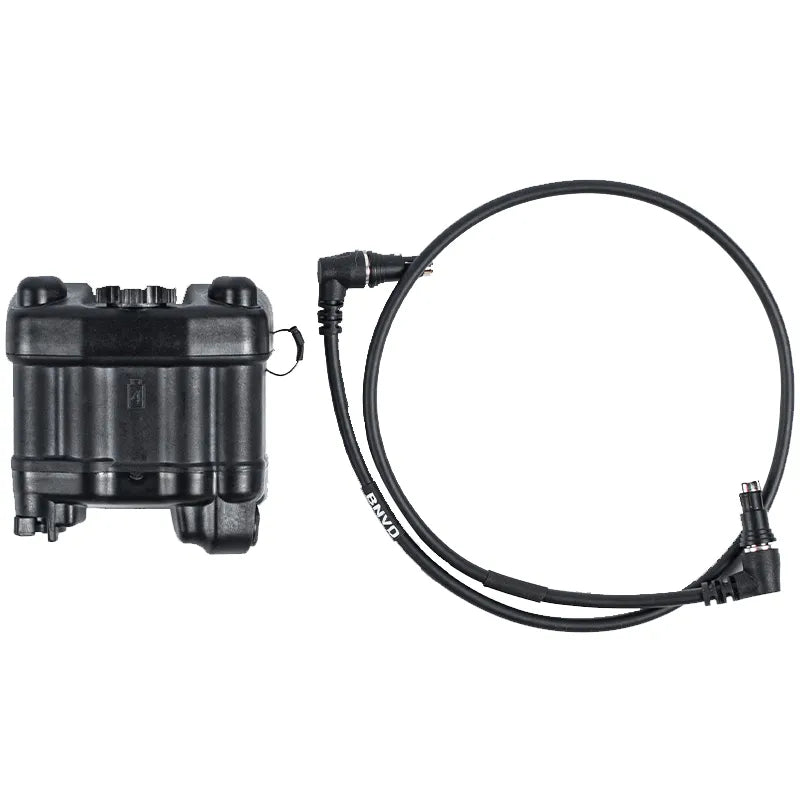
For binocular and panoramic systems, external battery packs may also help with helmet balance and runtime.
This is especially relevant for quad-tube systems such as PNVG-style devices, where external power support is commonly used.
Useful pages include:
For helmet balance and battery support, read Managing NVG Weight: Why You Need a Strobe Battery Pack for Helmet Balance.
Dust-Free Assembly Environment
Night vision devices include sensitive optical and electronic components.
Dust, debris, and contamination can affect:
-
Image cleanliness
-
Lens clarity
-
Tube installation
-
Seal quality
-
Long-term reliability
-
Customer perception
A professional assembly environment reduces contamination risk.
The PNVG-18 product page states that ARGUS assembly and test procedures take place in a dust-free plant.
This is especially important for:
-
Image intensifier tube installation
-
Lens installation
-
Multi-tube assembly
-
Optical alignment
-
Final inspection
-
Packaging
For B2B buyers, dust-free assembly is a manufacturing capability worth asking about.
Quality Control Before Packaging
A serious NVG should not go from assembly directly into a shipping box.
Final quality control should include inspection of:
-
Tube image
-
Focus
-
Diopter adjustment
-
Collimation
-
Lens cleanliness
-
Housing condition
-
Battery function
-
Switch operation
-
Gain control if applicable
-
Mount interface
-
Waterproofing or sealing checks
-
Packaging completeness
-
Accessory inclusion
The goal is not only to build the device.
The goal is to ship a device that performs consistently.
This matters especially for wholesalers because every defective unit can affect reputation, dealer relationships, and customer trust.
ARGUS describes QC and packaging as part of the workflow for assembled panoramic systems on the PNVG-18 page.
Serviceability and Spare Parts Support
A military-spec NVG should also be maintainable.
Even rugged devices may eventually need:
-
Lens protection replacement
-
Battery cap replacement
-
O-ring replacement
-
Retaining ring replacement
-
Purge valve service
-
Lens repair
-
Tube replacement
-
Cable replacement
-
Housing maintenance
Serviceability matters because professional buyers do not only care about the first sale.
They care about long-term operation.
ARGUS supports this through the Spare Parts collection, Accessories collection, and assembly-related pages such as NIGHT VISION DEVICE ASSEMBLY TOOLS SETS.
For lens protection support, read Why You Shouldn’t Skip Lens Protectors: Sacrificial Lenses vs. PVS-31/PVS-14 Rubber Caps.
Manufacturing Capability for OEM and Wholesale Buyers
For OEM and wholesale buyers, manufacturing capability is not only about one finished product.
It is about whether the supplier can support:
-
Multiple housing platforms
-
Multiple tube grades
-
Custom configurations
-
Tube matching
-
Bulk order consistency
-
Accessory bundles
-
Spare parts support
-
Testing workflows
-
Dealer product tiers
-
After-sales service
A strong supplier should help wholesalers build complete product lines rather than isolated SKUs.
For example, a wholesale night vision program may include:
-
Entry-level Gen2+ monoculars
-
PVS-31 style binoculars
-
BNVD-style articulating systems
-
Gen3 premium options
-
PNVG panoramic systems
-
Tube testing tools
-
Lens protection
-
Mounts and battery packs
-
Spare parts kits
For more on this topic, read How ARGUS Supports Night Vision Wholesalers: OEM & Custom Housing Solutions.
You can also visit CAPABILITIES and About Us.
Military-Spec NVG Manufacturing Checklist
Before sourcing military-spec night vision goggles, buyers should ask:
1. What Housing Platform Is Used?
Confirm whether the system is based on PVS-14, PVS-31, BNVD, PNVG, or another platform.
2. What Tube Grade Is Installed?
Check FOM, SNR, resolution, EBI, halo, phosphor type, and auto-gating.
3. Are Tubes Matched?
For binocular and panoramic systems, tube matching is critical.
4. What Equipment Is Used for Collimation?
Professional optical alignment equipment matters.
5. Is Diopter Calibration Performed?
Focus comfort should be verified before shipment.
6. Is the Device Nitrogen Purged?
Moisture control is essential for field reliability.
7. Is Waterproofing or Vacuum Testing Performed?
Ask what environmental checks are part of QC.
8. Is Assembly Done in a Controlled Environment?
Dust-free assembly helps reduce contamination.
9. Are Spare Parts Available?
Long-term serviceability matters for professional users.
10. Is There a Clear QC Workflow?
A good supplier should be able to explain how final inspection is performed.
Common Mistakes Buyers Make
Mistake 1: Judging Only by FOM
FOM is important, but it does not prove assembly quality.
Mistake 2: Ignoring Collimation
Poor collimation can make even good tubes uncomfortable in binocular systems.
Mistake 3: Treating “Military-Spec” as a Marketing Word
Ask what testing, calibration, and manufacturing process supports the claim.
Mistake 4: Ignoring Sealing and Purging
Internal fogging can ruin the user experience.
Mistake 5: Buying Without Spare Parts Support
Professional systems need long-term maintenance support.
Mistake 6: Ignoring Tube Matching
Matched tubes are essential for binocular and panoramic systems.
Mistake 7: Assuming Rugged Appearance Equals Rugged Performance
Real durability depends on engineering, materials, assembly, and QC.
Where to Explore Manufacturing-Relevant Products and Support Pages
Useful pages include:
Related guides:
-
How ARGUS Supports Night Vision Wholesalers: OEM & Custom Housing Solutions
-
How to Test Night Vision Tubes at Home: A Guide to the Diopter Tube Test Device
-
The Importance of NVG Nitrogen Purging: Why You Need a Purge Valve Fitting
-
What Causes Distortion in NVGs? The Difference Between Aspherical and Spherical Lenses
-
Gated vs. Non-Gated Image Intensifiers: Why Autogate Matters for Tactical Night Operations
-
P43 Green Phosphor vs. P45 White Phosphor: Eye Strain and Contrast in Long-Duration Operations
Final Thoughts
A military-spec night vision goggle is not defined by appearance alone.
It is defined by the complete manufacturing process.
A serious NVG should combine:
-
Rugged housing design
-
Correct tube selection
-
Careful tube matching
-
High-quality optics
-
Accurate collimation
-
Proper diopter calibration
-
Nitrogen purging
-
Moisture control
-
Environmental sealing
-
Dust-free assembly
-
Reliable power systems
-
Final QC inspection
-
Spare parts support
For professional buyers, wholesalers, and OEM partners, manufacturing capability is just as important as the product specification sheet.
A night vision device may look strong in photos, but the real question is whether it can remain clear, aligned, sealed, and reliable under demanding use.
That is what separates a basic NVG from a professional-grade system.
If you are evaluating military-spec night vision goggles, do not only ask what tube is inside.
Ask how the device is built, tested, aligned, sealed, purged, inspected, and supported after the sale.
That is where real manufacturing capability becomes visible.